


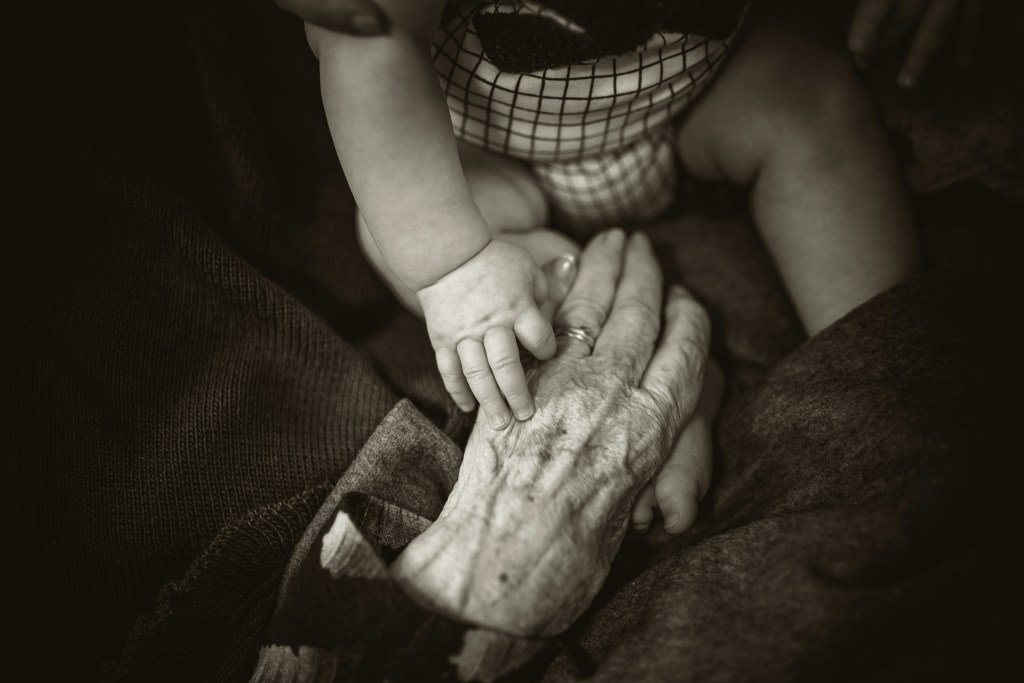
It seems intuitive that connecting with others is a valued part of life. Still, in periods of challenge, in grief, in illness, in the universal experience of aging, the ease of social connection naturally ebbs and flows. How much, then, should we prioritize the pursuit of consistent social connectedness, in order to thrive? How important is social connection for well-being? How much do relationships sustain health, and how does pain inform us about the loss of social attachments?
Researchers have described pain as a neural alarm system that responds to threat (Eisenberger, 2015). Attention to what might be triggering this delicate system is an important aspect of work in pain psychology. In my current role in a large cancer center, the threat of social isolation – through pain limitations, disease burden, grief, and bereavement – is a frequently cited challenge in the narratives patients share.
“It’s hard because nobody understands. You end up feeling so alone. It hurts.”
“My pain keeps me from being able to get along with people like before, so yes, it is not just frustrating, it is hurtful.”
“I can’t get the old me back. Everything is different now, and people don’t seem to know how to handle that.”
Pain sounds the alarm of potential harm. In these expressions of isolation, existing physical pains worsen, and social pains are experienced physically. The cycle of and connection between social loss and the body’s warning of threat seem clear. In reflecting upon these sentiments with patients, it is often difficult to fully find the distinction between what may be termed “psychological” pain and “physical” pain. In fact, social pain, defined as “the distressing experience resulting from broken social bonds,” is one aspect of psychological pain that has been empirically linked to similar neural circuitry as physical pain (Eisenberger & Lieberman, 2004). Social losses hurt, and the frequency and intensity of associated (physical and emotional) pain serves as a compelling indication that the threat of social isolation is powerful, pervasive, and deeply affecting.
It makes sense. Indeed, health psychology research informs us that social connection predicts better health outcomes (e.g., one’s appraisal of social support can affect cancer mortality; social support buffers the negative impact of anxiety and depression on pain (Galloway et al., 2019)). Empirical findings reinforce that not only is social isolation a critical public health concern but a major risk for poor physical and mental health (Cornwell & Waite, 2009; Holt-Lunstad et al., 2015; Shankar et al., 2011). Supported development of or re-establishment of social connections, then, seems to serve as one key pathway towards quieting the alarms of both physical and emotional pain (Maciejewski et al., 2022).
Recently, I had the opportunity to read the novel, Remarkably Bright Creatures (2022), by Shelby Van Pelt. With grace and whimsy, the author allows the reader insight into one woman’s (Tova’s) journey of loss, accompanied by and observed through the lens of Marcellus, a “remarkably bright” giant Pacific octopus. As Tova takes on the transition to her “golden years” while continuing to mourn the loss of those most important to her, social isolation looms as a painful, impending threat throughout the novel. Pain is appreciated in the form of an injured ankle Tova navigates alone, in instances of nostalgic missing, frequent reminders of what could-have-been, comparisons with same-age others’ social supports, and perhaps most of all, the prospect of a future without important others journeying alongside. Though paired with Tova’s resilience and autonomous spirit, we see social pain is a running theme throughout the novel. Tova’s story provides a touching case study for pain, grief, and coping through connection and further, suggests that perhaps these connections do not necessarily have to be human.
As Tova returns again and again to the local aquarium, her place of employment, even while on leave with an ankle injury, the reader sees part of the draw is a continued, unfolding friendship with Marcellus. As Tova shares more thoughts and time with the octopus, the two develop mutual interest and growing attachment. Soon, Tova is fondly appreciating the non-verbal ways Marcellus finds to communicate with her, through carefully placed objects and subtle tentacle nudges and tugs. With this understanding, she begins to care for and support Marcellus’s desires and pursuits, even if simply to escape out-of-tank for midnight rendezvous. In turn, Marcellus endeavors to share his keen observations with Tova.
The importance of social connection in propelling Tova towards greater hope is well-illustrated in the events and descriptions of the next transitions in her life. Van Pelt narrates Tova’s deepening relationship with Marcellus, her recognition of the companionship she continues to have in longtime friends, openness to redefining a friendship, and the deep connections she discovers in her quest to understand the loss of her son. The story depicts not only the ways Tova navigates pain with healing through the ties of human loyalty, emotion, and family; but likewise, the positive influence simply of shared openness, time, and care, even when verbal (or human) connection is absent. Perhaps, in relating to Tova’s story, we also appreciate how Marcellus’s impact on Tova’s life suggests that exchange of understanding and perceived closeness sparks healing, even when with a giant, albeit highly intelligent, sea creature.
Tova’s story gifts us with valuable life lessons. Through themes of pain, the reader recognizes the need for change and support. Through themes of connection, the reader appreciates a viable pathway toward flourishing, despite pain.
How important are social connections for well-being? Immensely. Is it possible these connections are healing, even when beyond the parameters of human-to-human communication? Quite probably. Our own painful experiences, bodies’ threat mechanisms, health science, and relatable stories about giant octopuses all tell us so.
*Quotations provided with patients’ verbal consents.
Works Cited:
Cornwell, E. Y., & Waite, L. J. (2009). Social Disconnectedness, Perceived Isolation, and Health among Older Adults. Journal of Health and Social Behavior, 50(1), 31–48.
Eisenberger, N. I. (2015). Social pain and the brain: Controversies, questions, and where to go from here. Annual Review of Psychology, 66, 601–629. https://doi.org/10.1146/annurev-psych-010213-115146
Eisenberger, N. I., & Lieberman, M. D. (2004). Why rejection hurts: A common neural alarm system for physical and social pain. Trends in Cognitive Sciences, 8(7), 294–300. https://doi.org/10.1016/j.tics.2004.05.010
Galloway, S. K., Meadors, P., Boselli, D., & Walsh, D. (2019). Anxiety, depression, pain, and social support in a large representative cancer population. Journal of Clinical Oncology, 37(31_suppl), 76–76. https://doi.org/10.1200/JCO.2019.37.31_suppl.76
Holt-Lunstad, J., Smith, T. B., Baker, M., Harris, T., & Stephenson, D. (2015). Loneliness and social isolation as risk factors for mortality: A meta-analytic review. Perspectives on Psychological Science: A Journal of the Association for Psychological Science, 10(2), 227–237. https://doi.org/10.1177/1745691614568352
Maciejewski, P. K., Falzarano, F. B., She, W. J., Lichtenthal, W. G., & Prigerson, H. G. (2022). A micro-sociological theory of adjustment to loss. Current Opinion in Psychology, 43, 96–101. https://doi.org/10.1016/j.copsyc.2021.06.016
Shankar, A., McMunn, A., Banks, J., & Steptoe, A. (2011). Loneliness, social isolation, and behavioral and biological health indicators in older adults. Health Psychology: Official Journal of the Division of Health Psychology, American Psychological Association, 30(4), 377–385. https://doi.org/10.1037/a0022826
Van Pelt, S. (2022). Remarkably Bright Creatures. HarperCollins Publishers.
Image Credit: Photo by Rod Long on Unsplash