


Why do Black people die prematurely?
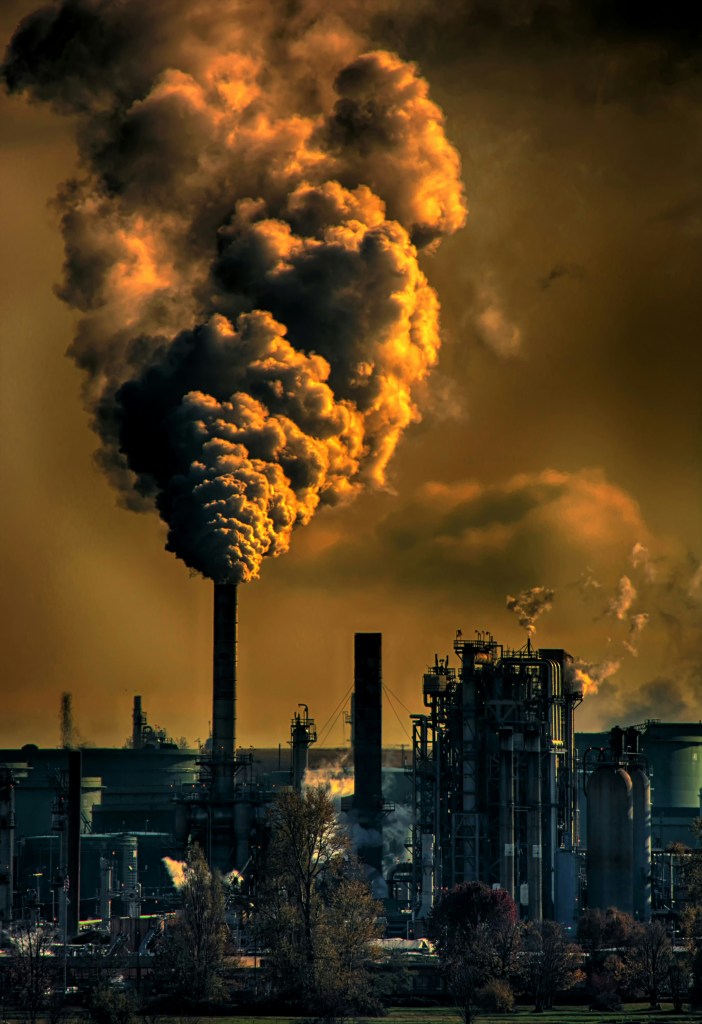
Racial health disparities have always existed in the United States. Despite notable progress, Black people continue to experience a disproportionate burden of disease and death. While lifestyle choices and environmental conditions contribute to poor health outcomes, focusing mainly on diet and exercise minimizes the importance of environmental health. In this essay, I argue that reducing racial health disparities requires us to prioritize environmental justice by directly addressing how air pollution impacts health equity. As the federal government rolls back environmental justice policies, air pollution continues to increase premature deaths in fence-line communities. Ignoring environmental justice does not “Make America Healthy Again.” Instead, this neglect perpetuates disparities because air pollution is a cause of mortality.
The debate about whether Black people’s suboptimal health is a byproduct of lifestyle choices or environmental conditions is over a century old. On May 26, 1896, Atlanta University, a Black college, launched its Conference for the Investigation of Negro Problems under the theme “Mortality Among Negroes in Cities.” Presenters highlighted the mortality gap between Black and white people, attributing it to ignorance, intemperance, poverty, and negligence. They claimed that Black people either needed education to learn about healthy lifestyle choices or their community leaders needed to push for structural interventions. H.R. Butler, a presenter and Black physician in Atlanta, insisted that the United States cannot close the mortality gap by eliminating ignorance, intemperance, and poverty as long as it remains negligent toward Black people’s lived experience.
Butler’s point about negligence shows how air pollution worsens racial health disparities. Notwithstanding the Environmental Justice Movement’s laudable efforts since the 1980s, Black people are still exposed to the most air pollution compared to other racial and ethnic groups. In 2024, Stanford Medicine researchers uncovered that Black people have experienced the highest number of deaths attributed to air pollution in 97 percent of counties nationwide. The study examined fine particulate matter (PM2.5), a mixture of solid particles and liquid droplets, which can penetrate the bloodstream and harm every organ. PM2.5 exposure leads to deaths from multiple diseases, including cardiovascular disease, cerebrovascular disease, chronic kidney disease, chronic obstructive pulmonary disease (COPD), dementia, type 2 diabetes, hypertension, lung cancer, and pneumonia. Because racial health disparities persist, environmental rollbacks are essentially a death sentence for Black people.
Even with ample evidence, the scientific community has not reached consensus on the health effects of air pollution, which undermines efforts to reduce racial health disparities. Public health advocates pursue environmental justice as a pathway toward health equity, while critics prioritize lifestyle choices over environmental conditions. But three-fourths of Black people are more likely to live in fence-line communities compared to their white counterparts. Diet and exercise become secondary when Black communities confront air pollution, substandard housing, food deserts, and a lack of access to green space and quality healthcare. Neglect, described by Butler in 1896, has evolved: companies now knowingly emit hazardous toxins into the atmosphere, subjecting Black people to slow violence that brings them closer to premature death. For instance, more than 200 fossil fuel and petrochemical plants line “Cancer Alley” between New Orleans and Baton Rouge, an area with some of the nation’s highest cancer rates. Cancer Alleys exist across the United States, including Pittsburgh’s Mon Valley, where U.S. Steel’s Clairton Coke Works – the nation’s largest coke plant with a notorious compliance record – operates. These cases illuminate the interplay between environmental justice and health equity.
Examining air pollution as a cause of mortality is vital because it kills at least 100,000 people in the United States annually. By comparison, homicides claimed 22,830 lives in 2023. Polluting industries also commit violence that causes irreparable harm to Black bodies and will continue to do so until we remedy the unrelenting neglect in fence-line communities. The debate over racial health disparities is not binary. Lifestyle choices matter, but we cannot reduce disparities if Black people continue to breathe air unfit for life.
Photo by Chris LeBoutillier on Unsplash