


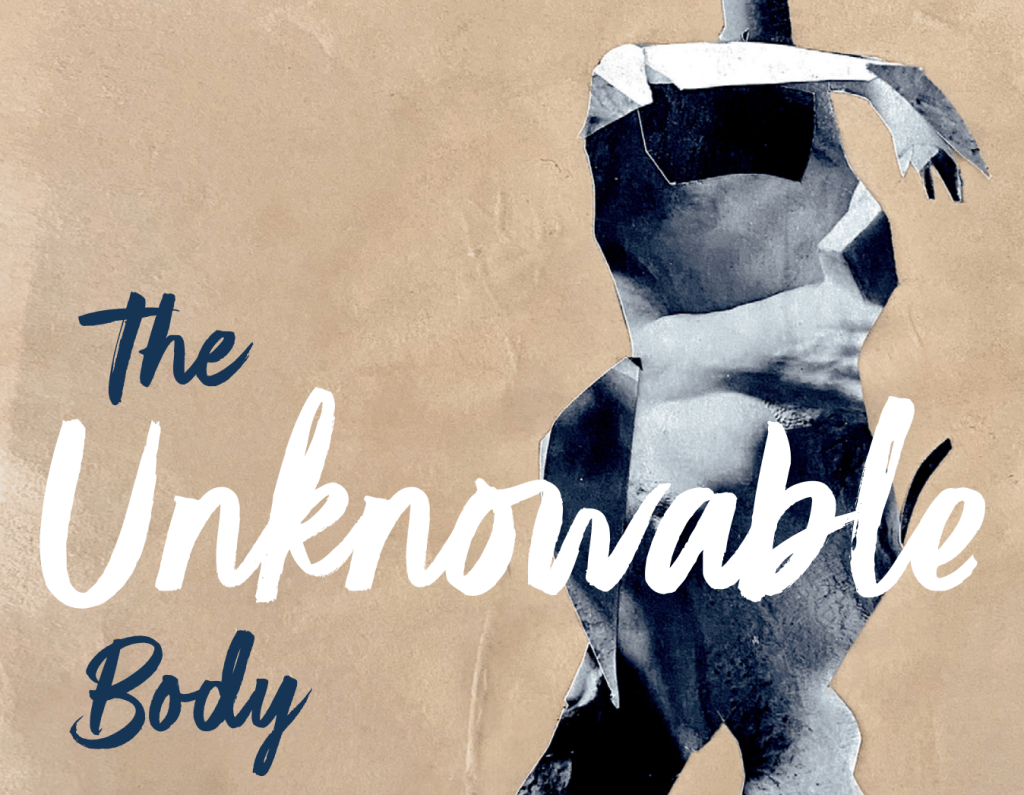
Moore, Lisa Jean. The Unknowable Body. Cambridge and Hoboken: Polity Press, 2026. 228pp. Hardback, ISBN-13: 978-1-5095-7074-4.
In The Unknowable Body (Polity Press, 2026), Lisa Jean Moore asks about the painful, uncomfortable, and sometimes embarrassing tensions between being a critical scholar and navigating the real medical world with its many “overlapping dimensions of reality” (173). What happens when a scholar’s personal medical decisions don’t exactly square with their feminist politics? When Moore becomes both a patient and a caretaker in a “medical-industrial complex” that she has critiqued for decades as a sociologist, she finds scholarship unable to speak to the complexities of her decision-making, her unexpected impulses, and her relational landscape as a queer woman.
The book’s central purpose is to offer a framework against frameworks, revealing the paradoxical uncertainties that have arisen through increased medical surveillance and suggesting how scholarship can more robustly engage the body’s fundamental unknowability without overly romanticizing it. But I found its pulse to be its investment in questions of praxis: what are the limits of scholarship in the medical exam room? What do we do when the close-looking of scholarly analysis comes to mirror the surveillance of medical technologies, always pushing toward knowledge but producing further uncertainty during lived experiences? What does it look like to be a patient with a body that is unknowable but still politically thinkable and generative?
The book follows in the tradition of feminist autotheory, building from and at times against canonical writers like Audre Lorde and Anne Boyer to tell several stories of convergence across medical experiences. Her own diagnosis with Ductal Carcinoma In Situ (DCIS, or “stage-zero” breast cancer) is concurrent with her former partner and current co-parent’s diagnosis with a brain tumor; her post-mastectomy reconstructive breast surgery is a complicated parallel to her current partner’s gender affirming surgery years prior; her previous pregnancies and termination, sports injuries, and thyroid cancer all come to bear on one another. Throughout, she briefly notes the roles her whiteness, financial stability, and employment play in minimizing challenges faced by others in the medical matrix of the United States. Moore’s storytelling implicitly draws a comparison between narrative decision-making and medical decision-making: there are (feminist) stakes to decisions like how much, and what, readers know about her children, her romantic partnerships, her medical insurance, just as there are stakes to what kinds of information doctors access and decide to monitor in her body.
With sociology’s systematic clarity, Unknowable Body organizes its central critical framework into four inter-influential categories of bodily unknowability: medical/diagnostic unknowability, emotional unknowability, temporal unknowability, and gender/identity unknowability. Moore demonstrates how each type of unknowability brings both pain and possibility for patients while functioning as profit engines for medical industries. The scaffolding of each category, which also form the book’s separate chapters, make it a valuable teaching text for advanced undergraduates, while its saturation of existing theoretical approaches and key terms make it a comprehensive springboard for graduate students, scholars, and readers outside of academia. While a reader should be broadly familiar with some of these terms to keep up with its citational pace, Moore repeatedly reinforces her main interventions with clarity. For example, she particularly emphasizes how medical institutions exploit patients’ privileged access to medical care in order to promote constant (self-)surveillance, her competing impulses to be a “good patient” and a good feminist, and the inability of medical bureaucracy to accommodate queer relational landscapes.
As she critiques the way that current scholarly schemas foreclose horizons of unknowing beneath assumptions of total understanding, Moore punctures her own framework with necessary fissures for nuance. For example, when the “medical-industrial complex” begins to loom like an ambiguous boogeyman in her arguments, she adds qualifications, such as that “individual providers can offer deeply personalized care even within institutional frameworks that often reduce patients to standardized protocols” (142). Still, given the dominance of the medical-industrial complex as a term in the text, it could be compelling to hear more specific analysis on the stakeholders that motor it.
Perhaps most generative was the book’s self-awareness that it may open Moore’s personal medical decisions to academic scrutiny, and that her stated discomfort with her own decisions won’t necessarily curtail criticism. Yet the book complicates immediate judgment: a reader leaving solely with criticism of Moore’s individual choices risks repeating what she critiques in medical rhetoric: “the focus on…individual decisions…turns each body into a site of potential pathology requiring constant monitoring” (24). The book positions her stories as most valuable for opening discussion rather than judgment, manifesting her gray-area of unknowability. Without fully defending herself nor apologizing, Moore acknowledges her own uneasiness with both long-thought choices and anesthesia-hazed impulses that will doubtlessly spark conversation for scholars and students of disability studies and feminist studies. Two examples in particular stand out: sharing her decision to terminate a pregnancy after “not good” results on a chorionic villus sampling (CVS) and giving no further detail, and awakening after breast reconstruction surgery by her male surgeon, Dr. P, to ask, “does Dr. P think my breasts are beautiful?” (44, 135). Moore seems to present these situations as intentional, unsettled sites of discussion, sharing feelings of guilt and embarrassment while addressing their complexity and the systems (medical, scholarly, personal) that shape both her actions and her responses to those actions. The book’s negotiations between vulnerability and privacy might prompt readers toward nuanced questions of praxis rather than approval or condemnation of her as an individual in these scenes.
The book feels extremely relevant for articulating the current stakes of critiquing medicine. Moore makes blunt statements like, “I don’t distrust science itself,” a phrase that may not have felt as politically necessary five years ago. She reminds the reader that medical technology and practitioners have saved her life and those of the people she loves. And the book arrives at a time when teaching and examining the application of scholarship to “overlapping dimensions of reality” is more pressing than ever.