


As a psychiatric consultant, my days are spent sitting and waiting for a page. When I get one, I read the medical chart, make a phone call, and then I put on my white coat. The people I’m going to see have often never seen a psychiatrist before. Putting on the white coat adds the imprimatur of biomedical competence to what we do.
Consult-Liaison psychiatry, or CL Psychiatry, formerly known as Psychosomatic Medicine, is the service in the hospital that aims to help medical and surgical teams with their patients’ behavioral issues. For example, if a patient is admitted for a liver transplant, or to give birth, or because they’re in the midst of diabetic ketoacidosis, and their behavior becomes too difficult for a team to manage, they give us a call. We do our best to review the patient’s medical record, consider their past psychiatric history, and offer recommendations to the team—either behavioral or pharmaceutical—to help manage whatever the issue may be.
If “behavior too difficult to manage” seems vague, it is. What clears the bar varies based on the team, and even on the individual provider. Things like active psychosis, mania, or suicidality almost always fit the bill as reasons to contact us, as those conditions clearly “belong” to psychiatry, as a heart attack belongs to cardiology.
But the wiggle inherent in “difficult behavior” is often the kernel of frustration for psychiatric consultants. Who exactly is to say that a patient’s “anxiety” is out of proportion with their serious medical condition and requires psychiatric intervention, for instance? Why exactly does a psychiatrist need to be involved for a patient who is verbally abusive about not getting adequate pain control, or if they are actively withdrawing from substances? Sometimes, when asked to clarify these issues on our phone call, all a consulting team has to offer is, “I don’t really know, but something isn’t right and you need to see the patient.”
Very often, a primary team may not be able to articulate exactly why a patient’s behavior is unusual or why they feel the need to reach out to a psychiatrist. But they are people too, and can recognize when a fellow human’s behavior is somehow unusual, even if they lack the classificatory language of psychiatrists. They are acutely aware when things are not going well in their treatment of a patient. Even if initially a consult may be vague or equivocal, we can help teams figure out what exactly may be going on. We can help a team navigate difficult social situations and difficult feelings.
In this respect, the “L” in CL does a lot of heavy lifting. In fact, I would contend that the Liaison role is weight-bearing for the entire hospital enterprise. That opinion isn’t self-congratulatory or a justification for psychiatry’s role. It’s based upon the fact that as psychiatrists, we are able to engage in an alternative paradigm for understanding human distress that our medical/surgical peers do not have easy access to.
Psychiatrists have facility with the psychosocial, in addition to the biomedical, which has greater explanatory weight for the sorts of complaints common to CL services. During the coalescence of CL Psychiatry as an independent specialty in the 1970s-80s, several anthropologists wrote reflections on the possible role of CL as a means to disseminate the psychosocial throughout the hospital. Thomas M. Johnson, an anthropologist working on a CL team in the mid-1980s, observed how CL amplified issues of the marginality of the psychosocial tradition in the biomedical-heavy hospital system as psychiatrists used symbolic objects such as the white coat or pharmaceuticals as biomedical Trojan Horses for the introduction of more psychosocial content into a patient’s care (Thompson 966-7). Arthur Kleinman, prominent psychiatrist-anthropologist, offered his perspectives on psychosocially-engaged CL practice as part of a 1982 edited volume on Clinically Applied Anthropology. Kleinman reflected that CL’s liminal status between biomedical and psychosocial ways of knowing permitted social scientists to productively intervene on “knotty conceptual and methodological concerns in the borderland between anthropology and medicine” relevant common CL complaints such as demoralization, grief, and frustration with the healthcare system (Kleinman 83).
Having to thread the needle between a peripheralized way of knowing and one so dominant as the biomedical is exhausting. Both authors commented on how hard CL work was, cognitively and affectively. Kleinman offered that he often felt “frustrated” and “unhappy” with both his clinical work and his social scientific contributions. Even in 1986, Johnson observed some psychiatrists to find CL “unrewarding,” “hopeless,” and “demoralizing” (Thompson 971).
I too have found it hard. It’s difficult to daily navigate the stressors of a complex medical system and have to constantly switch between often-incommensurate ways of knowing, much less explain these tensions to those with other perspectives and agendas. It’s easy to feel cross-eyed and frustrated all the time. It’s easy to take psychiatry’s peripheral status personally, especially when we feel strongly that what we have to offer patients and teams matters.
At the end of the day, though, it’s work worth doing. We can act as a check on the reductionism of biomedicine, on its tendency to elide or efface the humanity of patients and practitioners alike. Whether the daily practice of CL is ever so lofty—sitting and waiting for a page—is sort of immaterial. That CL exists means we have something to be excited about.
Works Cited
Johnson TM. “Medical education and practice on the periphery: consultation psychiatry and the psychosocial tradition in American medicine.” Soc Sci Med. 1986;22(9):963-71. doi: 10.1016/0277-9536(86)90169-3. PMID: 3738567.
Kleinman, A. “The Teaching of Clinically Applied Medical Anthropology on a Psychiatric Consultation-Liaison Service.” In: Chrisman, N.J., Maretzki, T.W. (eds) Clinically Applied Anthropology. Culture, Illness, and Healing, vol 5. Springer, Dordrecht, 1982. https://doi.org/10.1007/978-94-010-9180-0_4
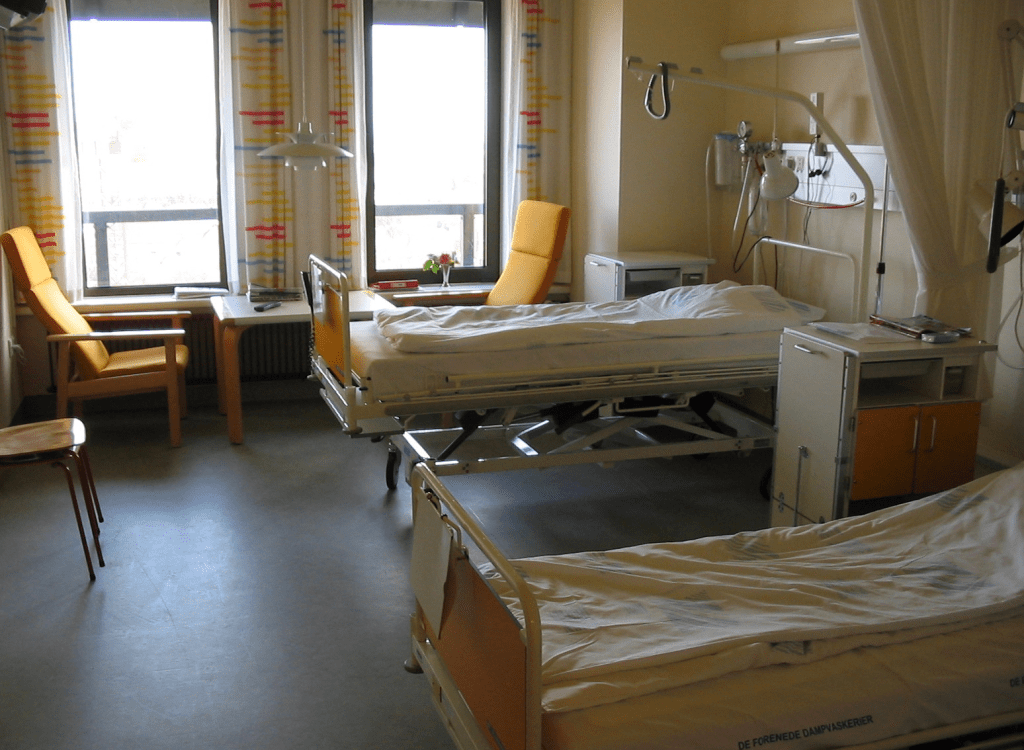
Sienicki, T. “A hospital room.” https://commons.wikimedia.org/wiki/File:Hospital_room_ubt.jpeg.
