


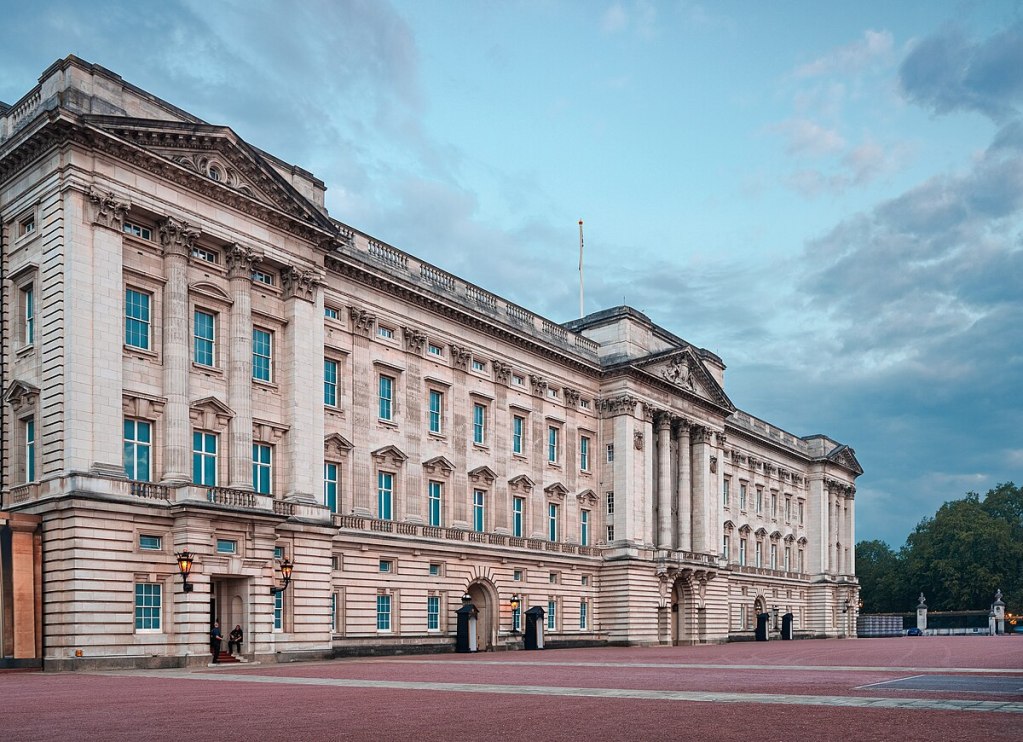
How did Victorians understand and diagnose mental illness? If a person on trial in a nineteenth-century British courtroom was thought to be suffering from “madness,” the court did not necessarily ask a physician to provide an expert opinion or to diagnose the individual. As Joel Peter Eigen explains, doctors were not respected as expert witnesses in the early nineteenth century, and many lay people thought that they were equally as capable of discerning the signs of mental illness.[1] Victorians believed that one of the most compelling signs of a person’s madness was their behaviour and, more specifically, their ability to act respectably.[2] As the case study of Julia Watkins demonstrates, Victorians assumed that an inability to control one’s impulses and passions was unquestionable evidence of madness.
Throughout the nineteenth century, middle-class conceptions of respectability dictated that women, like Julia Watkins, were expected to be calm, maternal, and civilizing influences on their families and to embody humility, compassion, piety, and gentleness.[3] Although these norms reflected social expectations rather than lived realities, they acted as a powerful common conceptual framework for many sectors of British society, and those who failed to adhere to these ideals were widely condemned. Perhaps the most egregious transgression of femininity was violence. As Judith Rowbotham writes, “‘good’ women were passive” and could be “persuasive,” but never “forceful.”[4] Women were expected to discourage violence, not partake in it. Consequently, if a woman acted with violence, her behaviour could be interpreted as evidence of an unsound mind. This is what happened to Julia Watkins when she was arrested at Buckingham Palace.
During the fall of 1839, Julia Watkins, “an elderly and shabbily-dressed woman of eccentric appearance,” made several attempts to enter Buckingham Palace and see Queen Victoria. Each time, the gatekeeper sent her away. On October 9th, Watkins went into the gatekeeper’s lodge, where she found the gatekeeper’s daughter, Mary Tate. Without warning, Watkins pulled a stone from her pocket and smashed an expensive mirror. Watkins then threatened to destroy everything in the Tates’ home, and Mary frantically signalled for a policeman. Constable Charles Brown quickly arrived and took Watkins to Queen Square Police Station.[5]
The next day, Watkins appeared before a magistrate at the Queen Square Police Court. When asked about her actions, Watkins explained that she was angry with the gatekeeper for preventing her from seeing the Queen. She stated that she thought it was grossly unfair that the Queen lived in luxury while she starved, and she wanted to speak to the Queen about this injustice. Watkins also explained that she broke the Tates’ mirror because “peop’e like them had no business with such a fine place.”[6]
The main purpose behind Watkins’s hearing was to determine whether she was of sound mind. The magistrate quickly ruled out the possibility that Watkins had been drunk at the time of her intrusion, or that her actions might have been influenced by the effects of alcohol.[7] Instead, the authorities believed that the only reasonable cause for Watkins’s strange and erratic behaviour was lunacy. Rather than calling a medical witness to examine Watkins, the police court magistrate looked at Watkins’s actions to provide insights into her mental state. When Watkins broke the Tates’ mirror and threatened to destroy their home, she completely contravened norms of demure, passive womanhood. Furthermore, Constable Brown testified that Watkins had several more stones in her pockets when she was taken into custody. This was a particularly alarming revelation, as it indicated not only that Watkins’s violence may have been premeditated, but also that she could have caused more damage to the gatekeeper’s lodge. Inspector Black of the London Metropolitan Police effectively summarized the authorities’ opinion on Watkins when he stated that “[she] was evidently insane, or else she would not have behaved in the way she did.”[8]
Notably, Watkins herself invoked the social unacceptability of female violence to defend herself. According to the London Evening Standard, when Watkins was given a chance to explain her actions, she stated that she was “sorry the mischief was done,” but that she was thankful she “did not lay violent hands upon [Mary Tate].”[9] With this statement, Watkins acknowledged that she acted wrongly and transgressed norms of femininity, but she also attempted to locate her behaviour on a scale of transgressions, demonstrating how much more severely she could have deviated from norms of respectable femininity. Watkins may have broken a mirror, but her actions and aggression were aimed at objects, and she did not bring any physical harm to Mary, whom she described as being “alone and unprotected.”[10] At the same time, however, Watkins’s statement indicated that she was capable of further violence, and that she could have harmed Mary if the constable had not intervened. Consequently, Watkins’s defence made little difference, and her violence was treated as incontestable proof of her insanity.
Julia Watkins’s case is an illuminating example of the extent to which Victorians perceived madness as being antithetical to norms of respectable femininity. Watkins’s acts of breaking a mirror and threatening the Tates’ home were sufficient evidence upon which to base an evaluation of her mental state. Tragically, this also meant that Watkins’s grievances were not taken seriously. Watkins attempted to bring attention to the socioeconomic inequality in British society. She was starving while the social elites lived in mansions and enjoyed decadence. But, because her frustration at this inequality manifested itself in violence, Watkins was dismissed as yet another madwoman who wanted to see the Queen.
[1] Joel Peter Eigen, Witnessing Insanity: Madness and Mad-Doctors in the English Court (New Haven: Yale University Press, 1995), 9-11.
[2] Eigen, Witnessing Insanity, 11, 83-86.
[3] James Curran, “Media and the Making of British Society, c. 1700-2000,” Media History 8, no. 2 (2002): 138; Leonore Davidoff and Catherine Hall, Family Fortunes: Men and Women of the English Middle Class, 1780-1850 (Chicago: University of Chicago Press, 1991), xvi, 25, 29, 199, 229, 289, 315, 323, 331, 338.
[4] Judith Rowbotham, “Gendering Protest: Delineating the boundaries of acceptable everyday violence in nineteenth-century Britain,” European Review of History 20, no. 6 (2013): 949.
[5] “Queen-Square,” Morning Herald, 11 October 1839, p. 4.
[6] “Queen-Square,” Morning Herald.
[7] “Queen-Square,” Morning Herald.
[8] “Queen-Square,” Morning Herald.
[9] “Queen-Square,” London Evening Standard, 11 October 1839, p. 4.
[10] “Queen-Square,” London Evening Standard.
Image Credit: Herzog, Julian. Buckingham Palace London Morning 2020. Wikimedia Commons.
