Public health initiatives have historically been shaped by institutional prejudice regarding what ‘kinds’ of people should be included in the ‘public’ when in pursuit of the public good (Pernick, 1997). The eugenics movement is often discussed as if it is a by-gone historical phenomenon, and the activities of eugenicists are remembered as being limited to advocating for the sterilization of marginalized groups and are heavily associated with Nazi atrocities (Raz, 2009; Stern, 2016). In reality, eugenicists and the ideals they represent are still alarmingly present and can be observed in responses to the COVID-19 pandemic. Eugenic ideas relate to wide-ranging ambitions to ‘improve’ humanity by controlling both reproduction and the visibility of individuals considered to be ‘un-fit’ and therefore unable to contribute to society. During the COVID-19 pandemic, language surrounding ‘fitness’ and societal contribution have surged. This language requires critical contextualization within the history of eugenics to understand its ability to harm.
Historically, the eugenics movement was based around the tenets of biological and genetic determinism of traits ranging from the behavioral to the morphological, which created a justification for unequal treatment of different groups in society (Laughlin, 1919; Pernick, 1997; Stern, 2016). When laying out a series of goals for eugenicists in various legal and scientific fields, Laughlin (1919) urged for the development of taxes on reproduction for those deemed ‘un-fit,’ subsidies for reproduction among those deemed ‘fit’, and that the distribution of educational opportunities be based on supposed genetic capability which aligned with race and class prejudice. During the early development of its philosophy, the eugenics movement showed an active interest in advocating for differential treatment of ‘fit’ and ‘un-fit’ individuals in aspects ranging from healthcare to education (Laughlin 1919; Pernick, 1997).
Medical research has a long history of pathologizing minorities, often guided by eugenicist philosophies that viewed infectious disease susceptibility (and, in some cases, infectious diseases themselves) as a mostly or entirely inherited trait (Dorr, 2000; Pernick, 1997; Tapper, 1997). In the United States, there was a fascination with the biology of Black individuals dating back centuries (Dorr, 2000; Tapper, 1997). Black individuals were wrongly assumed to be biologically predetermined to contract infectious disease, particularly sexually transmitted diseases. To this end, doctors invented diseases such as drapetomania and dysaesthesia aechiopis, which were reported to cause disobedience, reduced intellectual capacity, and reduced sensitivity in skin (Bailey et al., 2021; Tapper, 1997). These diseases were said to be more prominent in free Black individuals than enslaved Black individuals, and beatings were recommended as a treatment. Many decades later, research on medical students and residents indicate that some of these beliefs have persisted, with one study finding that 50% of medical students and residents harbored at least one false belief about biological differences between races, and that those who did were more likely to provide inaccurate and insufficient treatment recommendations for Black patients (Hoffman et al., 2016; Restrepo & Krouse, 2022). These biases result in poorer health care and the allotment of fewer healthcare resources to racialized patients (Bailey et al., 2021; Hoffman et al., 2016). Unethical treatments and inequality in healthcare have created the basis for an understandable distrust in public health ordinances among some historically marginalized communities, sometimes extending to noncompliance with public health measures as a form of protest (Waggoner, 2017).
Early on during the COVID-19 pandemic, systemic inequalities in the distribution of healthcare resources led to a resurgence of eugenics in new forms (Appleman, 2021; Khan, 2022). Many healthcare policy guidelines prioritized the health of those who have traditionally been categorized as ‘fit’ by eugenicists, while marginalized groups including imprisoned people, people with disabilities, the elderly, and racialized minorities were neglected (Appleman, 2021; Franco-Paredes et al., 2021; Khan, 2022). The existing lack of healthcare resources and regulation allocated to various institutions (many of them state-run) such as prisons, nursing homes, and psychiatric institutions, as well as frequent overcrowding, contributed to the creation of populations with increased vulnerability to health issues and disease outbreaks (Appleman, 2021; Franco-Paredes et al., 2021). The COVID-19 pandemic exacerbated inequity in these institutions as not all residents were given priority access to healthcare resources and in many cases, overcrowding within these institutions made adherence to COVID-19 prevention measures impossible (Appleman, 2021). Although the pandemic prompted some attempts at decarceration of vulnerable imprisoned individuals, many authorities failed to allow compassionate release from institutions such as prisons, jails, and psychiatric hospitals on the scale needed to meaningfully protect the health of residents, and in some cases decarceration also reproduced racial inequalities (Appleman, 2021; Franco-Paredes et al., 2021). Societal reluctance to engage in large scale compassionate release programs carries the implication that the separation of these institutions’ residents from the rest of society was more important than said residents’ health or survival.
This neglect and willingness to sacrifice vulnerable individuals who are not viewed as contributing members of society extended to policies that included blanket do not resuscitate (DNR) orders for many with learning or intellectual disabilities in places such as the UK (Courtenay & Cooper, 2021; Gulati et al., 2021). The distribution of healthcare resources during the pandemic continues to cast an uncomfortable light on which groups healthcare institutions and governmental authorities consider to be disposable, if not an outright detriment to society.
A growing body of researchers are using the COVID-19 pandemic as a time to pause and rethink the usefulness of previously held assertions within health systems (Goldenburg, 2021). The quick reliance on what we identify as eugenics-friendly pandemic policies and attitudes is reflective of an omnipresent ideology that is not a relic of a by-gone past just because it does not appear in its traditional forms (Appleman, 2021). Eugenics can be understood reductively as solely being bound to its most clear-cut cases, but we posit that the assumed ‘kill-ability’ or ‘die-ability’ of one group over another is an aspect of eugenics that festers more broadly (Teo, 2022). These terms are borrowed from theorists like Thomas Teo who build on theories of Necropolitics, which are concerned with machinations of killing the ‘Other,’ to also include the broader mindsets that allow for and even accept continued unequal death (Teo, 2022). A lack of action which knowingly will lead to death bolsters this mindset of ‘kill-ability’ and ‘die-ability’ despite not being a direct act of violence (Teo, 2022). An example of a non-direct act of violence is how vaccinations are routinely unevenly disseminated globally. In 2021, 75% of all the COVID-19 vaccines administered were carried out in only ten nations (Loembé & Nkengasong, 2021). The nations of Africa remained underserved, receiving less than 2% of global inoculations for COVID-19 (Loembé & Nkengasong, 2021). This is reflective of a history of routinely being underserved proper healthcare materials as seen in other outbreaks such as H1N1 and HIV/AIDs (Loembé & Nkengasong, 2021).
Pharmaceutical companies that patent and profit from disease mitigation are pioneers of biocapitalism as they are invested in health insofar as it is lucrative (Preciado, 2008). In this way, pharmaceutical companies are integral to the way we process and understand disease. Vaccinations and other health resources are readily afforded to a small number of nations because they are lucrative and therefore ‘fit’ within a biocapitalist system. Critical theorist Paul Preciado (2008) suggests that through this modality of processing illness on a global scale, the ‘Other’ who is excluded from the category of ‘fit’ is not discursively understood as ‘sick’ under biocapitalism. Resisting the eugenic impulse therefore requires more than stopping active pursuits of preserving the ‘fit’ but also recognizing how eugenics can be carried out through inaction and neglect in the distribution of resources under biocapitalism.
Negative eugenics is understood to be the act of eliminating undesirable traits whereas positive eugenics is the preservation of desirable traits (Stern, 2016; Wilkinson, 2010). Cases of negative eugenics are often understood as active instances since these cases seek to eliminate individuals and their ability to reproduce through sterilization, genocide, and other extreme acts such as the proposed reproduction taxes mentioned earlier. However, as the public relies heavily on government resources and programming to withstand health crises, inaction during crises like the COVID-19 pandemic becomes a form of negative eugenics as inaction disproportionately affects vulnerable populations not seen as a top priority in public health response. From uneven distribution of healthcare materials throughout modern epidemics to the neglect of individuals in government institutions, different forms of inaction are increasingly relevant avenues for eugenics ideology to make itself heard. Within the context of health crises like the COVID-19 pandemic, eugenics through inaction should be scrutinized to prevent extending the long legacy of violence that eugenics promotes.
Works Cited
Appleman, Laura I. “Pandemic Eugenics: Discrimination, Disability, & Detention during Covid-19.” Loyola Law Review, vol. 67, no. 2, 2021, pp. 329-414.
Bailey, Zinzi D. et al. “How Structural Racism Works — Racist Policies as a Root Cause of U.S. Racial Health Inequities.” The New England Journal of Medicine, vol. 384, no. 8, 2021, pp. 768–773.
Dorr, Gregory M. (2000). “Assuring America’s Place in the Sun: Ivey Foreman Lewis and the Teaching of Eugenics at the University of Virginia, 1915-1953.” The Journal of Southern History, vol. 66, no. 2, pp. 257–96.
Franco-Paredes, Carlo et al. “Decarceration and Community Re-entry in the COVID-19 era.” The Lancet Infectious Diseases, vol. 21, no. 1, 2021, pp. e11–e16.
Goldenburg, Maya. Vaccine Hesitancy in the Industrial North. University of Pittsburgh Press, 2021.
Gulati, Gautam et al. “People with Intellectual Disabilities and the COVID-19 Pandemic.” Irish Journal of Psychological Medicine, vol. 38, no. 2, 2021, pp. 158–9.
Hoffman, Kelly M. et al. “Racial Bias in Pain Assessment and Treatment Recommendations, and False Beliefs about Biological Differences between Blacks and Whites.” Proceedings of the National Academy of Sciences – PNAS, vol. 113, no. 16, 2016, pp. 4296–301.
Khan, Nazneen. (2022). “Pandemic Eugenics: The Delta Variant, Child Mortality, and the New Racism.” COVID-19: Surviving a Pandemic, edited by J. Michael Ryan, Routledge, 2022, pp. 57-66.
Laughlin, Harry H. (1919). “The Relation of Eugenics to Other Sciences.” The Eugenics Review, vol. 11, no. 2, 1919, pp. 53–64.
Loembé, Marguerite Massinga and John N. Nkengasong. “COVID-19 Vaccine Access in Africa: Global Distribution, Vaccine Platforms, and Challenges Ahead.” Immunity, vol. 54, 2021, pp. 1353-62.
Pernick, Martin S. “Eugenics and Public Health in American History.” American Journal of Public Health, vol. 87, no. 11, 1997, pp. 1767–72.
Preciado, Paul. Testo Junkie: Sex, Drugs and Biopolitics in the Pharmapornographic Era. Feminist Press, 2008.
Raz, Aviad E. “Eugenic Utopias/Dystopias, Reprogenetics, and Community Genetics.” Sociology of Health & Illness, vol. 31, no. 4, 2009, pp. 602–16.
Restrepo, Nicolas and Helene J. Krouse. “COVID-19 Disparities and Vaccine Hesitancy in Black Americans: What Ethical Lessons Can Be Learned?” Otolaryngology – Head and Neck
Surgery, vol. 166, no. 6, 2022, pp. 1147-60.
Stern, Alexandra Minna. Eugenic Nation: Faults and Frontiers of Better Breeding in Modern America (2nd edition.). University of California Press, 2016.
Tapper, Melbourne. “An ‘Anthropathology’ of the ‘American Negro’: Anthropology, Genetics, and the New Racial Science, 1940–1952.” Social History of Medicine, vol. 10, no. 2, 1997, pp. 263–89.
Teo, Thomas. “The Mentality of Dieability/Killability: Reflections on the Special Issue on Law, Medicine, and Bioethics.” Journal of Theoretical and Philosophical Psychology, vol. 42, no. 4, 2022, pp. 247-51.
Waggoner, Jess. “‘My Most Humiliating Jim Crow Experience’: Afro-Modernist Critiques of Eugenics and Medical Segregation.” Modernism/Modernity, vol. 24, no. 3, 2017, pp. 507-25.
Wilkinson, Stephen. (2010). “On the Distinction Between Positive and Negative Eugenics.” Arguments and Analysis in Bioethics, edited by Matti Häyry et al., Rodopi, 2010, pp.115-27.
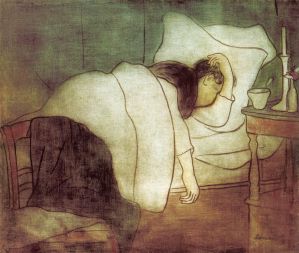
Cover image source: “The Witness Tree 2021″ by Judy Dow, an Abenaki/French-Canadian educator and artist. Image found at: https://confront-eugenics.org/about-us/the-witness-tree/