Human relationships with animals have changed as technologies and stigma have shifted over time. The two basic forms of human-animal relations, present in both modern and historical/archaeological contexts, are domestication for consumption or domestication for companionship (Trut et al., 2009; Zeder, 2012). Animals that do not easily fit into these two categories of human-animal relations may fall into a stigmatized category. These animals can be perceived as outsiders to society for various reasons, including the fear of emerging zoonotic diseases, much like we have seen in the case of COVID-19. The ongoing COVID-19 pandemic has provided a new trajectory regarding how humans interact and engage with animals in an everyday context. COVID-19 introduced new complications to current understandings of zoonosis, animal agency, and individual and collective perspectives surrounding the nature of human-animal relations.
COVID-19 brought about many changes to the daily patterns of individuals on a global scale including the implementation of social isolation policies, the requirement of face masks, the widespread distribution of hand sanitizer in public spaces, as well as vaccination mandates. From the beginning of the pandemic, there were evident shifts in the perspectives of the public on interactions with certain animal species. The origin of the COVID-19 virus was traced to a seafood wholesale wet market (the Huanan Seafood Wholesale Market), in Wuhuan, Hubei, China (Wu et al., 2020). In the early stages of study in December 2019 and January 2020, bats were identified as being the suspected reservoir of the COVID-19 virus (MacFarlane & Rocha 2020). The World Health Organization (WHO) emphasized that other sources had not yet been identified, but the correlation between bats and COVID-19 sparked a negative reaction against the species as a whole (MacFarlane & Rocha 2020). Since these early days, animals have continued to be seen in the public eye as the root cause of the new world we were navigating. These perspectives ignited a conversation not necessarily unique to COVID-19, but a central discussion, especially as the pandemic moved into its second and third year, that is: should humans be developing and administering vaccines to animals in a domestic context? The COVID-19 pandemic is not the first to occasion the administration of vaccines to domestic animals. Tizard (2020) outlines that many domestic animals have previously been administered vaccination against multiple forms of the coronavirus, including dogs, felines, poultry, pigs, and cattle. Pratelli and colleagues (2004) outline that dogs in particular have a more extensive history of vaccine administration and testing as the role of coronavirus vaccines in canids has been actively investigated for over two decades.
Fitzsimons (2020) of NBC News tackles how COVID-19 impacts animal vaccine administration in a piece entitled Cincinnati Zoo Vaccinates 80 Animals Against Covid-19. Fitzsimmons (2020) describes the choice made by employees of the Cincinnati Zoo in vaccinating the majority of animals to prevent outbreaks and virus mutations among species, with the hope of preventing mass culling events. With this information, one could assume that the reason behind the choice to vaccinate animals is to protect these species against COVID-19. On the other hand, we can also accept that vaccinations were not entirely driven by the overarching desire to protect the animals. The shifting perspectives of human-animal relations impacted many aspects of life, including the economic profit of establishments such as zoos. With the administration of the COVID-19 vaccines to popular animals such as great apes, big cats, and giraffes, to name a few, public perception of animals may shift back to one of fascination and intrigue rather than one of fear and distance.
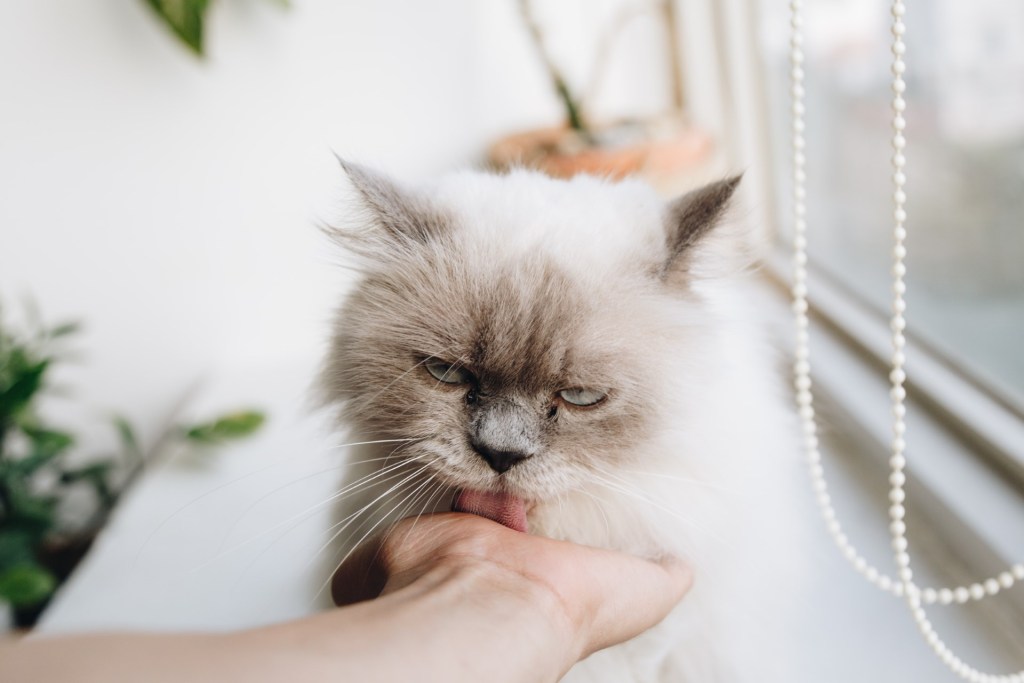
During the first year of the COVID-19 pandemic, shifting perceptions of human and animal interactions were not restricted to larger settings such as zoos, but also more intimate family settings concerning domestic pets. It was determined that some cats (both domestic and non-domestic) could contract SARS-CoV-2 (COVID-19). Due to these findings, Hosie et al. (2020) suggested it was necessary to keep track of possible transmission between humans and cats and even from cats to cats. In 2020, reporting on these findings caused fear that cats could potentially be a viral reservoir even though no evidence had yet been found of cat-to-human SARS-CoV-2 transmission (Hosie et al., 2020). Although this supposition was circulating, a study collected data in 2020 and found that, during the lockdown, cats and their owners experienced increased interaction and emotional closeness (Riggio et al., 2022). While some countries considered creating a vaccine for domestic animals, the U.K. government had a very different approach, especially to cats, when COVID-19 became a pandemic. During the period when it was still not determined if cats could transmit this infectious disease, some members of the U.K. government momentarily considered asking pet owners to exterminate their cats due to fear of them becoming a viral reservoir for SARS-CoV-2 (Ambrose, 2023; Syed, 2023). Since cats are domesticated for companionship, this decision by the U.K. government would have boded poorly with the general public (Ambrose, 2023; Syed, 2023).
We form deep emotional connections with animals that fall within the category of domestication for companionship in Western culture, especially dogs and cats. Counterfactually, if a different animal, such as pet rats, were considered a potential COVID-19 reservoir, the public might have reacted differently due to the stigmatization against them. Rats are often associated with disease and filth due to their role in history as “bearer of disease” (Birke, 2003, p. 210). Stigma has a great impact on the way we view animals and our relationship with them (Patronek et al., 2000). For example, pit bulls are stigmatized as being a vicious breed (Patronek et al., 2000). Relationships between certain animals and humans can also vary worldwide as stigma is not uniform across the globe as cultures vary and evolve (Rizzolo, 2020).
Through a surface-level analysis of multilayered issues, this brief introduction to the shifting perceptions seen in human-animal relations as a result of the COVID-19 pandemic sheds light on a few key points. First, though efforts have been made to administer vaccines against COVID-19 to certain animal species, as seen in many American zoos, the question persists in the reasoning behind these vaccinations. Is the vaccination of animals for the benefit of protecting animals from COVID-19, or is a step taken for human benefit, whether for a financial or public health agenda? Second, pertaining to the stigma of animal species, the shifting public perceptions of animals in the early pandemic period reveal the flexibility of such stigma. The fear of newly transmittable zoonotic diseases created a divide among humans and animals beyond those which have historically been the target of such stigma, namely the rat, and includes animals in a domestic-companionship context, such as cats.
Works Cited
Ambrose, Tom. “UK Cat Cull was Considered Early in Covid Crisis, ex-Minister Says.” The Guardian, 1 March 2023, https://www.theguardian.com/world/2023/mar/01/uk-cat-cull-was-considered-early-in-covid-crisis-ex-minister-says. Accessed 26 Sept 2023.
Birke, Lynda. “Who—or What—are the Rats (and Mice) in the Laboratory.” Society & Animals, vol. 11, no. 3, 2003, pp. 207-24.
Fitzsimons, Tim. (2020, October 19). “Cincinnati Zoo Vaccinates 80 Animals Against Covid-19.” NBC News, 19 Oct. 2020, https://www.nbcnews.com/news/animal-news/cincinnati-zoo-vaccinates-80-animals-against-covid-19-n1281880. Accessed 26 Sept 2023.
Hosie, Margaret J., et al. (2020). “Respiratory Disease in Cats Associated with Human-to-Cat Transmission of SARS-CoV-2 in the UK. Veterinary Record, vol. 188, no. 8, 2020, e247.
Patronek, Gary et al. “Managing the Stigma of Outlaw Breeds: A Case Study of Pit Bull Owners.” Society & Animals, vol. 8, no. 1, 2000, pp. 25-52.
Pratelli, Annamaria et al. “Safety and Efficacy of a Modified-Live Canine Coronavirus Vaccine in Dogs.” Veterinary Microbiology, vol. 99, no. 1, 2004, pp. 43-9.
Riggio, Giacomo et al. “Cat–Owner Relationship and Cat Behaviour: Effects of the COVID-19 Confinement and Implications for Feline Management.” Veterinary Sciences, vol. 9, no. 7, 2022, 369.
Rizzolo, Jessica B. “Wildlife Farms, Stigma and Harm.” Animals, vol. 10, no. 10, 2020, 1783.
Syed, Armani. (2023, March 2). “The U.K. Briefly Considered Killing All Pet Cats Early in the Pandemic.” Time, 2 March 2023, https://time.com/6259763/uk-considered-killing-cats-pandemic/. Accessed 26 Sept 2023.
Tizard, Ian R. (2020). “Vaccination Against Coronavirus in Domestic Animals.” Vaccine, vol. 38, 2020, pp. 5123-130.
Trut, Lyudmila et al. “Animal Evolution During Domestication: the Domesticated Fox as a Model.” Bioessays, vol. 31, no. 3, 2009, pp. 349-60.
Zeder, Melinda A. “The Domestication of Animals.” Journal of Anthropological Research, vol. 68, no. 2, 2012, pp. 161-90.
Cover image source: from Pexels.com (all photos and videos on Pexels can be downloaded and used for free).