When the first waves of the Black Death struck Europe in the fourteenth century, the last thing likely to be on anyone’s mind was staying cheerful; yet overwhelmingly, this is the advice that contemporary physicians gave. Medieval plague treatises explained that dwelling excessively on the horrors of the plague and thoughts of death could actually lead a person to be more susceptible to the illness. If one could not physically escape the pestilence by leaving town, the next best thing was to avoid thinking about it.
More than 600 years after the plague and nearly five years after a pandemic of our own, we know that ignoring a disease will not make it go away. Long before the CDC declared that COVID-19 was no longer a public health emergency, there were those dissenting internet voices who insisted that if we just stopped talking about the pandemic, life would return to normal (Reuters, 2020). This was obviously untrue. At the same time, living amid constant news reporting on the pandemic seems to have its own detrimental health effects. Those who became overwhelmed by fear and anxiety about the virus were given a diagnosis of their own: coronophobia (Arora, et. al. 2020). In short, neither excessive worrying nor total denial was going to stop the pandemic outright.
As a medieval scholar, I have spent a number of years thinking about the effects that a plague can have on individuals and society. In 2020, even as I felt myself growing weary of the phrase “unprecedented times,” I wondered how medieval people managed to live their day to day lives even as they braced themselves for new onslaughts of pestilence. I turned to literature for an answer.
There is no universal way to respond to the cultural trauma of a pandemic. Even so, fourteenth century poet Giovanni Boccaccio has given us perhaps the most famous contemporary description of the Black Death and the public response to it. In The Decameron, Boccaccio presents some stock characters that might be recognizable to modern readers: those who are rich enough to flee to unaffected places; those who disobey municipal orders and drink riotously in groups; those who take advantage of the situation and line their own pockets as they peddle false cures; and those so afraid of the disease that they isolate themselves from friends and family and live in a state of constant fear.
Perhaps the most interesting response to the plague that Boccaccio describes are those who carry on by
“holding converse with none but one another, lest tidings of sickness or death should reach them, and diverting their minds with music and such other delights as they could devise.”
Here, beneath the practicality of quarantine is the hint in a belief that they will remain healthy if they only ignore reports of plague deaths and keep themselves distracted with pleasant songs and stories. In some ways, the entire project of The Decameron is just that– a storytelling contest built on the need to keep the plague at bay by refusing to talk about the plague at all. We might be tempted to see Boccaccio’s brigata as engaging in “toxic positivity” culture (Reynolds, 2022). But in their own time period, the group is actually engaging in best practices for avoiding contagion.
In the fourteenth century, the dominant model of health was still Galenic humoral theory. This model held that the body was comprised of four basic substances or “humors”: blood, phlegm, black bile, and yellow bile. Each humor had properties of heat (hot or cold) and moisture (dry or wet), which affected an individual’s physical health as well as their temperament. Too much or too little of any of these humors could result in illness.
To maintain good health, medieval patients were warned to be mindful of the “six non-naturals” that could affect the body and spirit alike. These were:
- Food and drink
- Exercise and rest
- Air
- Sleep
- Evacuation or purging
- Emotions
While diet, exercise, sleep, and gut health resonate with modern readers looking to maintain a healthy lifestyle, regulation of air and emotions might strike the modern reader as an unusual way to avoid illness. Medieval physicians saw the body as a variable and porous entity, affected equally by forces outside and inside the organism. In order to maintain a healthy lifestyle, one needed to be cognizant of forces acting upon the body from the outside– but they also had to be wary of internal forces as well.
Of particular concern for those facing the Black Death was melancholia, the result of too much black bile. A melancholic individual, being of cold and dry complexion, was at a higher risk for contracting the pestilence, an affliction believed to be caused by inauspicious planetary conjunctions which subsequently poisoned the air. Medieval physicians warned that melancholia could be particularly dangerous in plague times. Pauduan physician Michele Savonarola wrote that the pestilence was fueled by melancholy, sadness, and heavy thoughts of death. His contemporary, Tommaso del Garbo advised his fellow Florentines:
[A]void thinking about death or passion, or anything mournful, and instead it is better to think about delightful, pleasant and cheerful things, and avoid all melancholy … And it is good to listen to songs and music, as it is being in pleasant company. Every pleasant activity is good at this time. (Pieragostini, 2021).
In this context, we can see how Boccaccio’s young people are in some ways just following doctors’ orders when they seek to deal with the plague in their midst by cheerfully ignoring it, distracting themselves with stories and songs. We also know that this method for warding off plague was ineffective. A better contemporary approach was Jacme D’Agramont’s suggestion to wash the hands in vinegar and rosewater; cover the mouth with a vinegar-soaked sponge when interacting with the infected; and avoid contact with the sick if possible (Duran-Reynals and Winslow, 1949). In this regimen, we again hear echoes of familiar pandemic advice: wash your hands, cover your nose and mouth, and socially distance wherever possible.
As we enter the holiday season, no doubt our own days will be full of cheerful relaying of stories, festive songs, and happy memories: and, unfortunately, the specter of disease. But there is some good news: COVID rates are lower leading up to Thanksgiving this year than they have been since we have been tracking the virus. Nevertheless, the CDC recently warned that those numbers could change rapidly (Roeloffs, 2024). The last four years all show a spike in rates of COVID around the winter holidays. Even as we make merry with family and friends, it’s important not to ignore the real and present threat that respiratory illnesses like COVID, RSV, and even the flu pose, particularly to high-risk groups, the immunocompromised, the very young, and the elderly. An attitude of moderation — testing if traveling, masking if high risk, distancing if ill — seems an apt response. Ignoring the threat of COVID won’t help us any more than excessively dwelling upon it. But the importance of maintaining balance in the face of illness is something that even a medieval audience would have understood.
Works Cited:
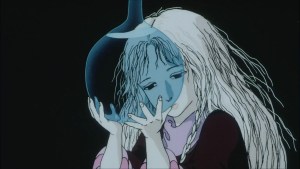
Boccaccio’s brigata of young people tell cheerful tales to distract themselves from the plague.
- Centers for Disease Control and Prevention. COVID Data Tracker. Atlanta, GA: U.S. Department of Health and Human Services, CDC; 2024, November 25. https://covid.cdc.gov/covid-data-tracker.
- Reuters, “Fact check: Ignoring the pandemic does not mean it will ‘go away’ in two weeks.” 2020, September 29. https://www.reuters.com/article/world/fact-check-ignoring-the-pandemic-does-not-mean-it-will-go-away-in-two-weeks-idUSKBN26K33L/
- Arora, A, Jha, AK., Alat, P, & Das, SS. “Understanding coronaphobia.” Asian journal of psychiatry, 2020;54,102384. https://doi.org/10.1016/j.ajp.2020.102384.
- Boccaccio G. The Decameron, transl. JM Rigg, 1903, https://www.brown.edu/Departments/Italian_Studies/dweb/texts/DecShowText.php?myID=d01intro&expand=empty&lang=eng
- Duran-Reynals ML and Winslow C E A. “Regiment de Preserv Acio a Epidimia o Pestilencia e Mortaldats,” Bulletin of the History of Medicine,1949, Vol. 23, No. 1, 57-89.https://www.jstor.org/stable/44443424
- Pieragostini, R. “The Healing Power of Music? Documentary Evidence from Late-Fourteenth-Century Bologna,” Speculum vol. 96 iss. 1, (2021), 156 – 17. https://www.journals.uchicago.edu/doi/epdf/10.1086/711571
- Roeloffs, MW. “U.S. May See A Healthy Thanksgiving—But Covid, RSV Could Spike Before Christmas, CDC Warns.” Forbes. https://www.forbes.com/sites/maryroeloffs/2024/11/21/us-may-see-a-healthy-thanksgiving-but-covid-rsv-could-spike-before-christmas-cdc-warns/
Further Reading:
- Carlin M. “The Report of the Paris Medical Faculty, October 1348.” https://sites.uwm.edu/carlin/the-report-of-the-paris-medical-faculty-october-1348/
- Hajar R. “Medicine from Galen to the Present: A Short History.” Heart Views. 2021;22(4):307-308. doi:10.4103/heartviews.heartviews_125_21.
- Jouanna, J., & Allies, N. (2012). “The Legacy of the Hippocratic Treatise ‘The Nature of Man: The Theory of the Four Humors.'” In P. van der Eijk (Ed.), Greek Medicine from Hippocrates to Galen: Selected Papers, 335–360. Brill. http://www.jstor.org/stable/10.1163/j.ctt1w76vxr.21
- NIEBYL, P. H. (1971). “The Non-Naturals.” Bulletin of the History of Medicine, 45(5), 486–492. http://www.jstor.org/stable/44447464.
- Poets.org. “Giovanni Boccaccio.” https://poets.org/poet/giovanni-boccaccio
- Reynolds, G. “Toxic Positivity.” Anxiety and Depression Association of America. https://adaa.org/learn-from-us/from-the-experts/blog-posts/consumer/toxic-positivity.