Black Feminist Ethics for the Dying
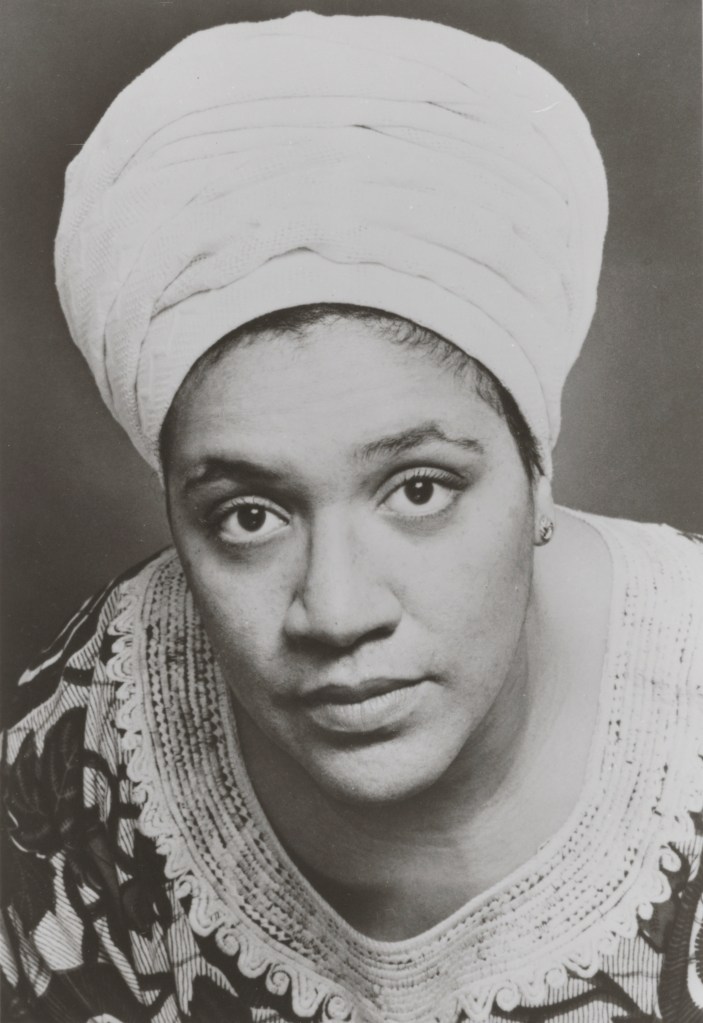
Audre Lorde was a black lesbian poet, civil rights advocate, teacher, and a breast cancer patient. Many describe her as a warrior who survived and fought multiple battles that existed in and outside of the clinical space. She fought the terror of anti-black violence and confronted the terror of what it meant to be dying of breast cancer as a black lesbian woman. Lorde writes her poetry and essays from a space of urgency. She wrote with the clarity that her body was marked and conditioned by compounding forces of death that the world had to offer.
Her breast cancer was not separate from the anti-colonial movements taking place across the African continent nor from the battle grounds of police brutality and domestic violence that continuously marked her body as sutured and saturated within multiple forces of death. . Lorde’s body already existed in a state of dying, marked by her wounded black flesh. Her body is a casualty of “the cosmic war against radiation, animal fat, air pollution, McDonald’s hamburgers, and Red Dye No. 2.” (Lorde 60) That is to say, the black body is structured to die if not by illness, then by the forces that produce illness and violence upon it. If that be school-to-prison pipelines, mass-incarceration, police brutality, family separation, colonial violence, labor exploitation, food deserts, these all exist as forces that have drawn up the battle grounds of the body that black flesh must exist in to survive.
Here, I am using the flesh in context to Hortense Spillers, body/flesh distinction. Spillers identifies the flesh as preceding and exceeding the historical phenomenon of the plantation. She explains that slavery was a series of “crimes against the flesh,” through the capturing of the body. The wounding and searing of their flesh operated as a primary narrative, whose deviance holds an archive beyond the capture of the body. The body is not neutral. Its health is not solely dictated by its bios or anatomy, but the flesh that exists within it. Blackness is scripted as a wounded flesh and therefore is stripped of its consent and care.
The question to ask is what relationships and power structures dictate how a body is conditioned to be cared for? What is the utility of care? Care cannot be separated from the politics of the body. Just as the slave was cared for to maintain capital, narratives, law, and medicine continue to position black and otherized bodies in a space where they cannot consent towards their care. Black feminist ethics force us to confront how these bodies are situated in death and what it means to care for dispossessed bodies.
The decisions that black persons make over their body are always questioned and dissented on by civil society. In 2021, a New York Times report identified Sickle Cell trait was listed as the cause of death in 47 different law enforcement custody cases. These cases included people who died after being restrained and stopped breathing, pepper sprays, dog bites, and stun guns, yet these cases were ruled natural and accidental deaths due to Sickle Cell trait. In 2023, Brittany Watts took several trips to the hospital due to her placenta detaching at 21 weeks. She later miscarried in her toilet at home and proceeded to flush and plunge the toilet in grief, attempting to save her baby by collecting all the spilled plasma, blood, and water from the toilet into a bucket. The police later investigated and charge her with ‘abuse of a corpse’ after her nurse called the police on her, suspecting her of birthing and abandoning a live baby in a bucket. For Lorde, this (dis)possession over her body appeared when she refused to wear a prosthetic after her mastectomy, even though her clinic told her it was a part of healing, a part of being restored into a ‘woman.’ When Lorde said no a second time, she was told that not wearing the prosthetic was “bad for the morale of the office,” which Lorde identified as a further assault over the right to “define and claim her own body.” (Lorde 60)
In all three cases, there is a pattern of consent being violated, but I argue that these scenarios are indicative of a consent that never existed. The police weaponizing a victim’s genes, bios, and body against their flesh to justify how they died non-consensually is the dispossessing of one’s body from their flesh. Despite Watts’s pregnancy being deemed a medical miscarriage, her nurse still refused to honor her words, narrative, and grief. Rather than her body being cared for in a hospital after the trauma its experienced, her body was given to police to be cuffed, constrained, and placed into custody because her cries were not those of a wounded body, but those of a wounded flesh that was marked as immoral before she entered the hospital. Lorde’s observation is astute that there is an assault against her ability to claim her body, maintained by inequitable relationships and scars of a violent system.
Medicine assumes that bodies are neutral in their orientation towards death. That if we recognize our biases enough, this will be sufficient to address medical disparities towards otherized persons. Only when medicine as an institution deconstructs how it (re)produces otherized bodies will deeper engagement of care towards the other exist.
So, what does it mean to care for the dispossessed, the dying? It is to identify what it means to be conditioned to die from the hands of the state or of disease produced by your environment. To do so, medicine must confront its attachment to the body and the anti-black relationships that maintain it. Instead, I argue for a praxis of care and medicine that engages itself through the flesh rather than the body. A medicine that forms relations to a wounded flesh. Where death is not weaponized against the dispossessed but can expose a vulnerability that “makes the ground fertile again.”
Work Cited
Lorde, Audre. The Cancer Journals. Aunt Lute Books, 1980.
Lorde, Audre Geraldine. A Burst of Light: Essays. Firebrand Books, 1988. Black Thought and Culture
database.
https://search.alexanderstreet.com/view/work/bibliographic_entity%7Cbibliographic_details%7
Mama’s Baby, Papa’s Maybe: An American Grammar Book. n.d.
LaForgia, Michael, and Jennifer Valentino-DeVries. “How a Genetic Trait in Black People Can Give the Police Cover.” U.S. The New York Times, May 15, 2021. https://www.nytimes.com/2021/05/15/us/african
McDunnah, Michael. “Brittany Watts, Charged with ‘Abuse of a Corpse’ After Miscarriage at Home, Files Federal Lawsuit.” Loevy + Loevy, January 14, 2025. https://www.loevy.com/brittany-watts-files-fede