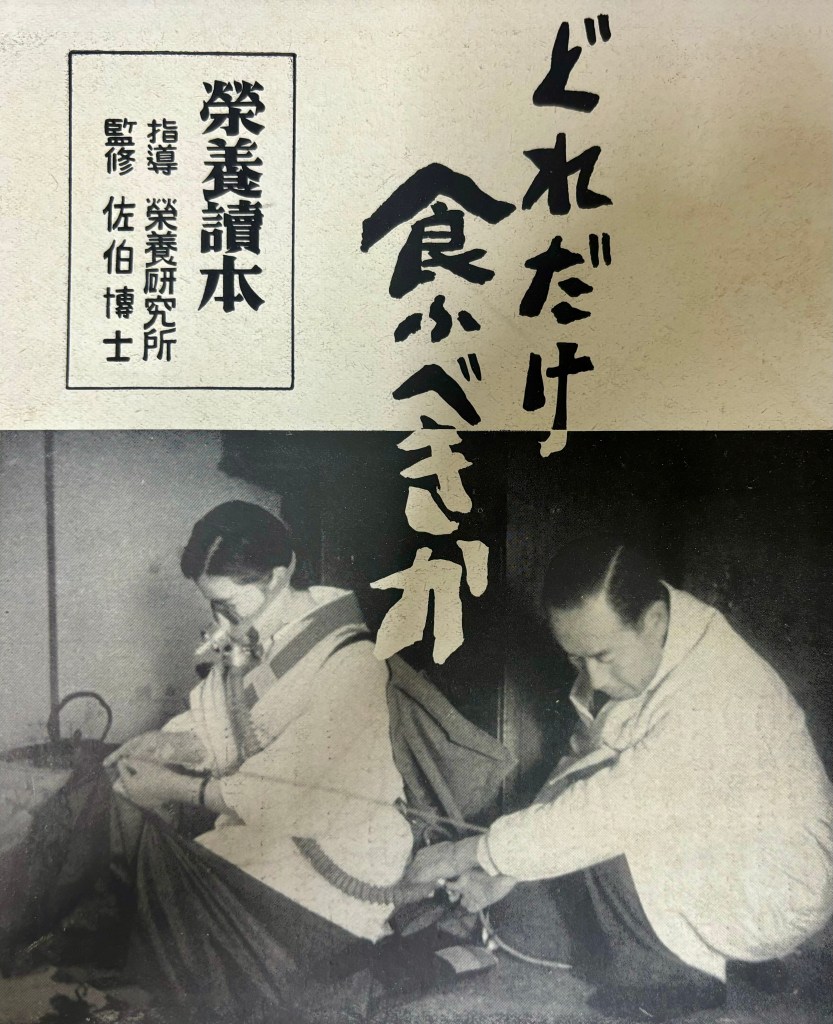
Imagine yourself time travelling back to Tokyo in a chilly December afternoon of 1940. Curiously wandering around Yūrakuchō (有楽町) area trying to find out what Tokyo dwellers’ entertainment life was like, you would excitedly find yourself at the center of Japanese cinematic culture. From the Marunouchi Shochiku Theater (丸の内松竹劇場) to Hogakuza Theater (邦楽座), cinemas were only a few blocks away from each other. Hoping to enjoy some stylish martial arts moves, you entered the cinema. Yet you saw a Japanese woman lying in a coffin-like narrow box, staring at you like this:
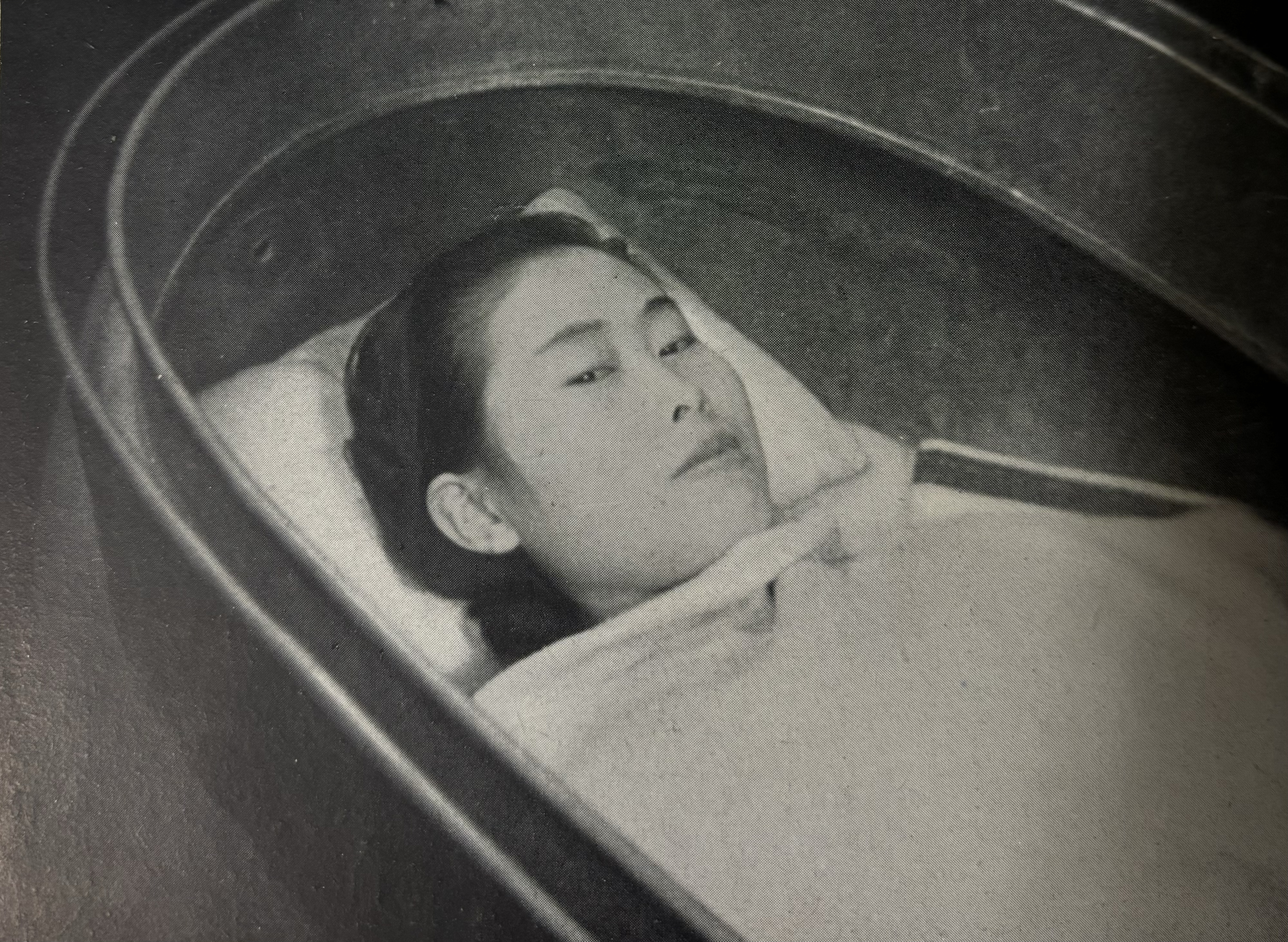 Picture 1: a woman in the chamber of calorimeter
“Is this a horror movie?” You might want to ask other audience.
If you did, the answer you got would be: “No. It is just a culture film, about nutrition.”
Though missing an opportunity to see ninja jumps or samurai sword swing, you experienced a key part of Japanese people’s wartime entertainment life—picking up rationed knowledge while watching culture films.
Culture films and rationed knowledge
Culture films (Bunka eiga, 文化映画) did not originate from Japan. Modeled on German term Kulturfilm, Japanese cultural film was created during wartime as a genre of short movies that both entertain and enlighten viewers. Japanese cultural theorist Hasegawa Nyozekan (長谷川如是閑), who was directly involved in the promotion of culture film, believed that Japanese cultural film should be an instrument of intellectual training for nurturing Japanese people of the future. It ought to maintain a fusion of “intellectual content (communicated on an everyday level avoiding textbookishness) and a high level of artistic treatment.” (High, 122).
The totalitarian regime endorsed the growth of culture film making. After the passage of the Film Law in 1939, Japanese culture films became programs to be mandatorily shown on big screens of each theater nationwide. Starting from July 1, 1940, culture films that passed government inspection were shown weekly in six big cities—Tokyo, Yokohama, Nagoya, Kyoto, Ōsaka and Kōbe. In other places, the mandatory showing began no later than December 1940 (Bunka nihon sha, 65). From October 1939 to June 1940, 3403 culture films out of 3747 applications were approved by the Ministry of Education to be shown across the country. 200 new Japanese culture films were approved in the first half of 1940 (Bunka nihon sha, 65).
The state policy to promote culture films was welcomed by many non-state actors, ranging from prominent intellectuals like Hasegawa to film producers like Kido Shirō (城戸四郎). They saw wartime state intervention as a chance to cultivate true valuable cinematic art. In their opinions, the past “absolute freedom allowed in the film world” in liberal society allowed bad films to fill up the marketplace and drive out the good ones (High, 123).
In the form of mandatory screening culture films, knowledge became rationed in everyday life, like rice and sugar. More than half of the culture films were short educational movies aiming to popularize knowledge of the earth, nature, human body, and civilization. Topics ranged from the life of a mosquito (Ka no isshō, 蚊の一生) and how snowflake is formed (Yuki no kesshō, 雪の結晶), to the function of x-ray (Rentogen sen to seimei, レントゲン線と生命) and how telephone works (Jidō denwa kōkan no hanashi, 自動電話交換の話) (Bunka nihon sha, 180, 187, 191, 208). In the popular vote for the best ten Japanese culture films in January 1940, six were themed popular science (Bunka nihon sha, 67). In comparison with culture films serving the purpose of militarist propaganda, those introducing trivia of waterbirds with beautiful music might have been more relaxing for wartime cinemagoers.
Nutritional knowledge on big screens
To the fast growth of culture films on popular science, many Japanese scientists keenly contributed. While film professionals saw the burgeoning of culture films as a chance to better the cinematic industry, scientists saw it as an opportunity to popularize scientific knowledge among the public (Yoshihara, 2004). Saiki Tadasu (佐伯矩), a leading nutrition scientist and the director of the Imperial Government Institute for Nutrition (IGIN), was one of them.
A champion of cultivating nutritional wisdom in society since the 1910s, Saiki had devoted much time and energy to familiarizing Japanese people with basics of nutrition science. From early 1920s, he organized nutritional training courses with his IGIN colleagues. Regularly publishing menus of healthy home cooking on major national newspapers and broadcasting them after radio became available in 1925, Saiki had made the most of mass media to spread nutritional knowledge (Sun, 6-7). Either a brainchild of reform-minded film professionals or a propaganda ploy of the totalitarian regime (or perhaps both), culture film was, in Saiki’s eyes, a powerful device for raising people’s nutritional awareness more than ever. For the first time, it could visualize how nutrition scientists conducted experiments on human bodies and animals, thereby making their advice of healthy eating more comprehensible and persuasive.
In 1940, Saiki and the IGIN worked closely with Kōhōdō film section (Kōhōdō eiga bu, 弘報堂映画部) to produce a series of culture films popularizing nutritional knowledge. In 1940, supervised by Saiki, culture film “How much should people eat?” (Doredake tabu beki ka, どれだけ食ぶべきか) passed governmental inspection in May and was distributed by the film ration section of Asahi Group (Asahi eiga haikyū bu, 朝日映画配給部) across the country in November. For the first time on big screens, many Japanese saw how people lay in the chamber of calorimeter to have their basal metabolic rates measured. They saw a woman wiping the floor with gas mask on her face and experimental equipment on the back, having her daily energy consumption measured. Then introducing the daily recommended dietary standard of 2400 calories and 80 grams of protein, the film lamented the unhealthy and uneconomical habit of many who consumed rice excessively. At the end, it urged Japanese people to adopt a balanced diet, and eat wisely for the sake of both their health and the future of Japan.
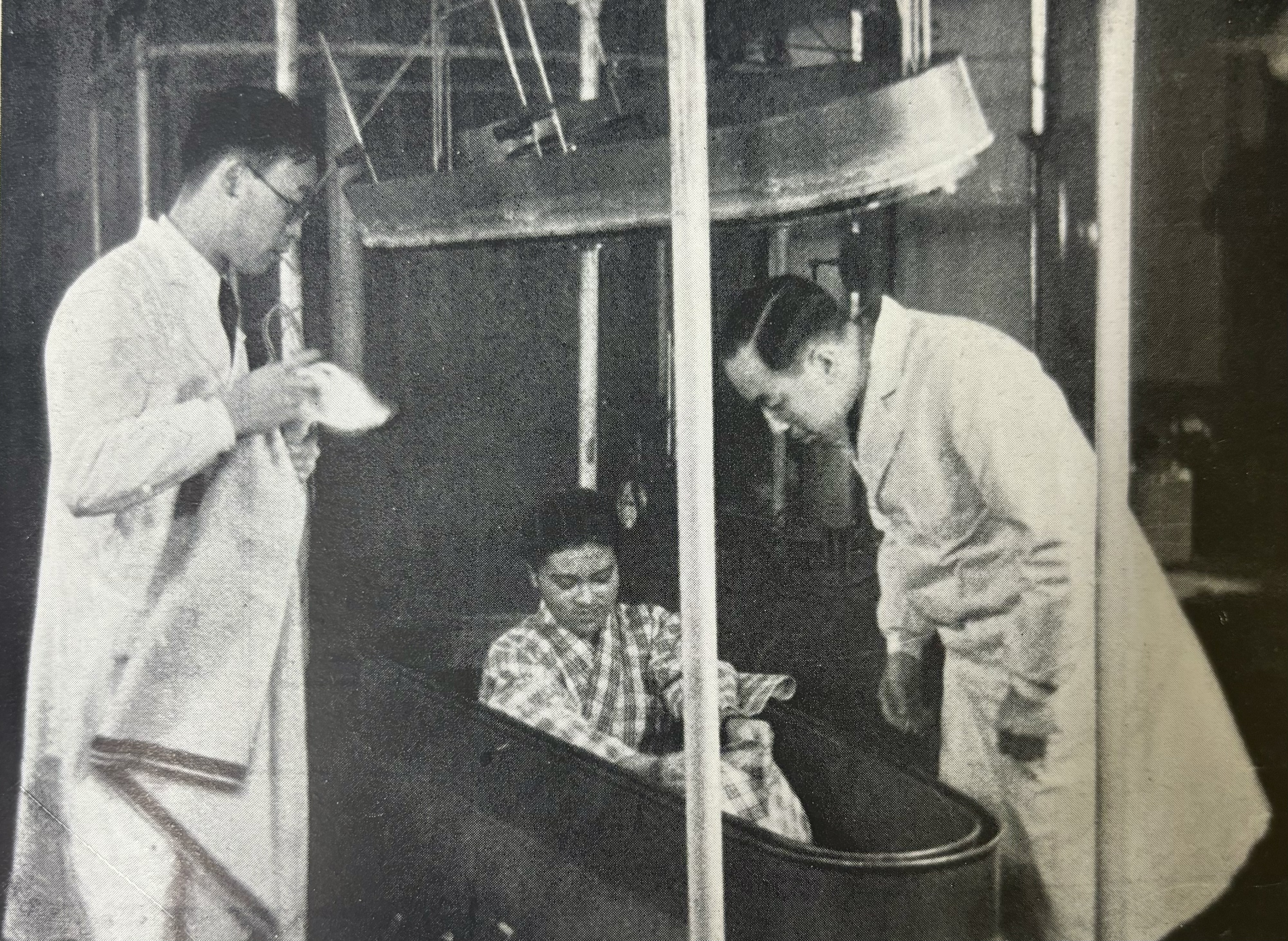
Picture 2: a woman coming out of the chamber of calorimeter
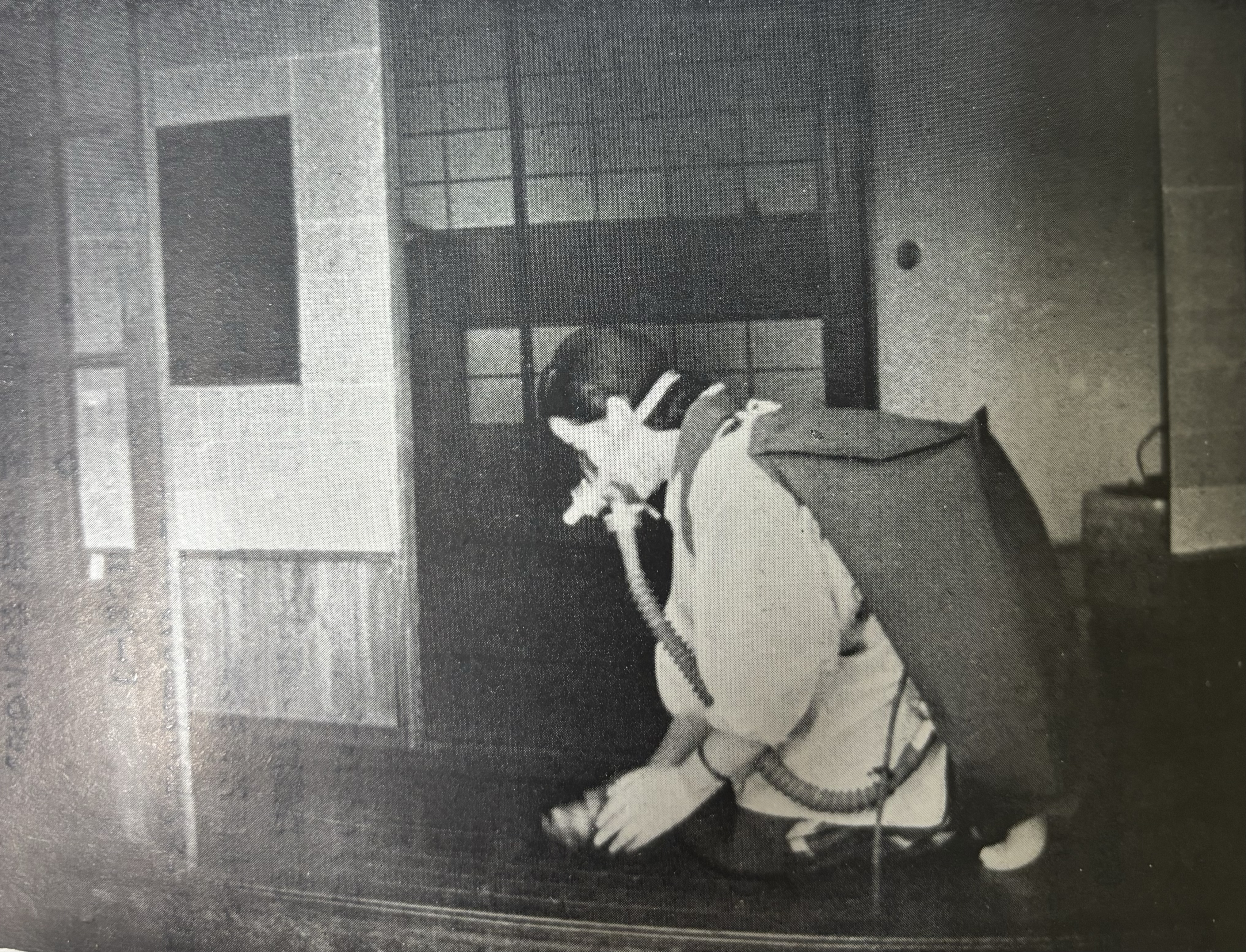
Picture 3: a woman cleaning the floor while having her calorie consumption measured
After the screening of “How much should people eat?”, Saiki and his colleagues continued their collaboration with Kōhōdō to make more culture films regarding nutrition. “Science of Vitamin” (Bitamin no kagaku, ビタミンの科学) was made under the supervision of nutrition scientist Hara Tetsuichi (原徹一); and in October 1942, it reached the big screens of each Japanese cinema to teach viewers the importance of vitamins and how to obtain them. In the same year, “Health and Food ” (Kenkō to shokumotsu, 健康と食物) was shown to emphasize the urgency to improve nutritional condition of rural population by more consumption of protein-rich foods (Eiga nihon sha, 72-3). No later than 1942, Kōhōdō completed the script of a culture film titled “the IGIN” (Eiyō kenkyū sho, 栄養研究所), in which research and social outreach of the institute was introduced in detail (Suzuki, 1940s).[1] Plans were also made to make more culture films on nutrition, with titles like “How to Eat?” (Ikani tabu beki ka, 如何に 食ぶべきか) and “Japanese foods” (Nihon no shokumotsu, 日本の食物) (Bunka nihon sha, advertisement of Kōhōdō film section).
Rethinking state and scientists in medical propaganda
When exploring Saiki and his fellow scientists’ involvement in the making of Japanese wartime culture films on nutrition, I come to rethink medical propaganda comparatively. Long being discussed in a framework of colonial history, the term highlighted the state’s central role in decision-making, educational program designing and policy implementation (Michaels, 177-8). Recent research on medical propaganda recognizes more active agency of medical professionals; yet the attempt of colonial biomedical management of the population seems to be a more dominant narrative (Meerwijk, chapter 4).
However, the case of Japan offers a different perspective of understanding medical propaganda as a globally adopted method of medical knowledge circulation. This story departs from a conventional depiction of nutrition science an essential state tool to cultivate strong soldiers, labors, and imperial subjects for war efforts in Japan. Instead, it highlights Japanese nutrition scientists’ initiative for popularizing nutritional knowledge with newest media—a journey they had stepped on long before the birth of Japan’s totalitarian regime during the war.
They did not serve the state; they made the most of it.
Pictures
All pictures in this article are from the script of culture film “How much should people eat?” (Doredake tabu beki ka, どれだけ食ぶべきか). Kōhōdō film section, 1940. Private manuscript collection of the author.
Notes
[1] The script of “the IGIN” (Eiyō kenkyū sho, 栄養研究所) was a part of the writer’s own primary source collection. However, the writer finds no historical records indicating the actual screening of the film in wartime Japan.
Reference
Bunka nihon sha. Nihon bunka eiga nenkan (year 15 of shōwa). Tokyo, Bunka nihon sha, 1940.
Eiga nihon sha. “Shinsaku shōkai” [New works of culture films]. Bunka eiga, vol. 2, no. 7, July 1942. pp. 72-3.
High, Peter B. The Imperial Screen: Japanese Film Culture in the Fifteen Years’ War, 1931-1945. University of Wisconsin Press, 2003.
Kōhōdō film section. Doredake tabu beki ka [“How much should people eat?”]. Kōhōdō film section, 1940.
Meerwijk, Baurits Bastiaan. A History of Plague in Java, 1911-1942. Cornell University Press, 2022.
Michaels, Paula A. “Medical Propaganda and Cultural Revolution in Soviet Kazakhstan, 1928-41.” The Russian Review 59, April 2000, pp. 159-78.
Sun, Jing. “Saiki Tadasu and the Making of the Global Science of Nutrition, 1900-1927.” Rockefeller Archive Center Research Reports, December 2, 2020. https://rockarch.issuelab.org/resource/saiki-tadasu-and-the-making-of-the-global-science-of-nutrition-1900-1927.html. Accessed November 25, 2023.
Yoshiwara, Junpei. “Senji tanpen no shisō: eiga-hō to bunka eiga,” [Wartime short films: the Film Law and culture films]. Japan Association of Audiovisual Producers, INC. 2004. https://web.archive.org/web/20071014054334/http://www.eibunren.or.jp/SF/shortfilm-2-2.html. Accessed November 19, 2023.