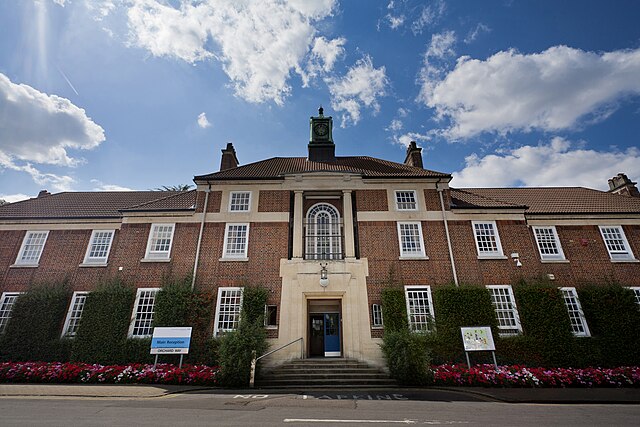
Recently, a professor questioned my use of the word “madness” when describing the mental states of patients in asylums in nineteenth-century Britain. The comment surprised me, as many renowned historians and recent publications use madness to describe mental health in nineteenth-century contexts.[1] Despite my confidence in my word choice, I panicked, worried that I had offended the professor and, perhaps more importantly, disrespected my historical subjects. Immediately, I began checking every source I used to see whether they, too, used the term “madness.” I then added several paragraphs to my dissertation, explaining the reasons behind my word choice and citing dozens of works to justify my methods. I feel a tremendous responsibility to my historical subjects and do my best to ensure that I tell their stories with respect and sensitivity. With that comment from the professor, I felt that I had completely failed. As I reflected on this experience, I began to think more broadly about the emotional labour involved in conducting medical history.
Medical history is a fascinating and deeply rewarding subject of inquiry. It is filled with stories of survival, advancement, and even miracles. Through medical history, we find inspiring figures who overcame the odds, who brought incredible medical advancements, and who laid the foundations for modern medicine. But for every story of achievement, there is one of mistreatment. In medical history, historians and researchers encounter distressing stories of abuse, neglect, abandonment, pain, mutilation, and death. Researching and describing this suffering can bring a heavy emotional toll.
Recently, scholars in various disciplines have paid increasing attention to the emotional labour involved in qualitative research.[2] However, the unique emotional labour of medical history has yet to be fully explored. Indeed, although there is a growing body of work on the emotional labour of healthcare professionals, the emotional labour of medical historians requires more development.[3]
Additionally, many of the frameworks scholars use for analyzing emotional labour in academic research are not compatible with medical history. For example, scholars often argue that emotional labour stems from personal interactions. Gabriela Capurro defines emotional labour as “face-to-face interactions that produce an emotional state in another person, while at the same time managing one’s own emotions.”[4] Katherine Carroll similarly explains that emotional labour involves “face-to-face engagement and considerable personal interaction with research participants or students.”[5] However, few studies have considered the emotional labour of archival or secondary research—the type of research that is integral to disciplines such as medical history.
Some medical historians require interviews for their work, but most rely on archival records, photographs, and documents as their only links to their subjects of study. Despite creating distance between researchers and their subjects, archival research can be just as emotionally draining and demanding as interviews. For instance, I have spent the last four years studying patients in asylums in Victorian Britain. Having read these individuals’ case books and personal papers, I feel as though I know them and have become emotionally invested in them and their stories. When I write about what they endured in asylums, I find myself filled with anger, indignation, or deep sadness.
Medical history also exposes scholars to dehumanizing medical theories, terminologies, and treatment methods. Recently, I taught an upper-year undergraduate seminar where one of our topics was health in nineteenth-century Britain. My students’ disgust during our conversation about eugenics and “scientifically-based” theories of racial superiority was palpable.[6] Encountering medical theories can be painful and difficult, and they can serve as an unhappy reminder of how little society has progressed.
The process of writing medical history is similarly a form of emotional labour. When it comes to contentious topics, such as medical terminology, historians rely as much on their own emotions and sensitivities as they do on logic. Returning to the example at the beginning of this piece, I use “madness” in particular historical contexts in my dissertation. My approach follows the work of Helen Leach, who argues that modern medical terminology does not always provide an easy alternative to historical terms. She explains that “[h]istorians of medicine have long been critical of retrospective diagnosis, warning of the dangers of moulding historical experiences of illness into modern diagnostic boxes and anachronism.”[7] There are others, however, who contend that scholars should use more inclusive terms.[8] Similarly, some historians argue that individuals who were institutionalized should be anonymized as a sign of respect and to avoid reinscribing harm and pain.[9] Others, meanwhile, contend that using subjects’ real names allows them to have agency and a voice.[10] For both terminology and naming historical actors, there is not an objectively right or wrong approach. Historians’ decisions on these issues are shaped by their methodological foundations, as well as their own understandings of how to make their work as respectful, empathetic, and sensitive as possible.
Most of all, many medical historians feel a responsibility to the people whose stories they tell. Medical history can easily lend itself to sensationalizing, but medical historians must make the story, rather than the shocking, gory, or outrageous details, the focus of their study. They have to ensure that historical subjects are not defined by their medical or mental states but are presented as multi-faceted human beings. Moreover, medical historians need to be skeptical of their sources, remaining cognizant of power imbalances and recognizing that case books and medical records only tell one side of the story.
Thus, although medical history has not been explored at length by scholars of the emotional labour involved in qualitative research, medical history involves extensive emotional labour at every step of the process, from the archive to the final written product. Emotional labour makes medical history deeply challenging, but it is also what makes this subject of study so worthwhile. Medical history deals with sensitive topics and people who were silenced or oppressed. It is only fitting, then, that its study should require emotion, sensitivity, and respect.
[1] For historians who use “madness,” see for example: James Dunk, “Wrongful confinement and the spectre of colonial despotism: a political history of madness in New South Wales, 1843,” History Australia 19, no. 1 (2022): 34-53; Joel Peter Eigen, Witnessing Insanity: Madness and Mad-Doctors in the English Court (New Haven: Yale University Press, 1995); Catherine Evans, Unsound Empire: Civilization and Madness in Late-Victorian Law (New Haven: Yale University Press, 2021); Roy Porter, Madness: A Brief History (Oxford: Oxford University Press, 2002); Valerie Pedlar, The Most Dreadful Visitation: Male Madness in Victorian Fiction (Liverpool: Liverpool University Press, 2006); Andrew Scull, “Madness in historical perspective,” Canadian Medical Association Journal 188, no. 10 (2016): 756-758; Scull, The Social History of Psychiatry in the Victorian Era (Philadelphia: University of Pennsylvania Press, 1981); Akihito Suzuki, “The Politics and Ideology of Non-Restraint: the Case of the Hanwell Asylum,” Medical History 39, no. 1 (1995): 1-17.
[2] See for example: Gabriela Capurro, “Witnessing the Ward: On the Emotional Labor of Doing Hospital Ethnography,” International Journal of Qualitative Methods 20 (2021): 1-11; Katherine Carroll, “Infertile? The emotional labour of sensitive and feminist research methodologies,” Qualitative Research 13, no. 5 (2012): 546-61; Joan G. Lalor, Cecily M. Begley, and Declan Devane, “Exploring painful experiences: impact of emotional narratives on members of a qualitative research team,” Journal of Advanced Nursing 56, no. 6 (2006): 607-16.
[3] On the emotional labour of medical professionals, see: Veronica Moretti and Riccardo Pronzato, “The emotional ambiguities of healthcare professionals’ platform experiences,” Social Science & Medicine 357 (2024): 1-10; Jacob D. Moses, Agnes Arnold-Goster, and Samuel V. Schotland, “Introduction: Healthcare Practitioners’ Emotions and the Politics of Well-Being in Twentieth Century Anglo-America,” Journal of the History of Medicine and Allied Sciences 78, no. 4 (October 2023): 341-51.
[4] Capurro, “Witnessing the Ward,” 1.
[5] Carroll, “Infertile?” 548
[6] On the history of eugenics, see: David Redvaldsen, A History of British Eugenics since 1865: From Francis Galton to Designer Barbies (Cham: Palgrave Macmillan, 2024).
[7] Helen Leach, “Madness and the monarchy: diagnosing King George III,” British Journal of General Practice 73, no. 733 (July 2023): 364.
[8] Catharine Coleborne, “Asylum Archives and Cases as Stories,” in Why Talk About Madness?: Bringing History into the Conversation (Cham: Palgrave Macmillan, 2020), 25.
[9] David Wright and Renee Saucier, “Madness in the Archives: Anonymity, Ethics, and Mental Health History Research,” Journal of the Canadian Historical Association 23, no. 2 (2012): 68, 74. See also Jonathan Ablard, Madness in Buenos Aires: Patients, Psychiatrists and the Argentine State, 1880–1983 (Calgary: University of Calgary Press, 2008), 13; Coleborne, “Asylum Archives and Cases as Stories,” 25; Angela McCarthy et al., “Living in the Asylum Record, 1864 to 1910: Utilising Large Data Collection for Histories of Psychiatry and Mental Health,” Medical History 61, no. 3 (2017): 368.
[10] Jacalyn Duffin, Langstaff: A Nineteenth-Century Medical Life (Toronto: University of Toronto Press, 1993), 25-9; Wendy Mitchinson and Franca Iacovetta, eds., On the Case: Explorations in Social History (Toronto: University of Toronto Press, 1998) 6; Julie Parle, States of Mind: searching for mental health in Natal and Zululand, 1868–1918 (Scottsville: University of KwaZulu-Natal Press, 2007), 25–6.
Image Credit: SLaMNHSFT. Bethlem Royal Hospital Main building view. 2011. Wikimedia Commons.


