I hesitated as I followed my parents into the dimly lit hospital room. Beeping machines broke the uneasy silence, and the sharp scent of disinfectant filled the air. A family friend’s young daughter had been admitted for liver failure and was awaiting a transplant as her condition deteriorated. She was a couple of years younger than me, yet what struck me most during our brief conversation that day was something simple: she missed school.
I was surprised. I couldn’t imagine anyone missing school, especially while enduring such pain. But she seemed genuinely sad, perhaps even defeated, and at first, I assumed it was because of her illness. When I returned a few weeks later, though, she appeared much brighter and more hopeful, even though her medical condition hadn’t changed significantly. The difference lay in her surroundings: her classmates had decorated her hospital room with colorful balloons, cards, and teddy bears, and her siblings had brought her favorite toys from home.
That small transformation stayed with me. Years later, while reading Joyful by Ingrid Fetell Lee, I was reminded of that visit. In her book, Lee explores how elements such as color, light, nature, and order can profoundly influence our emotions and, by extension, our health. She describes how the Sheffield Children’s Hospital makeover, where designers used playful colors and murals to make the space feel more welcoming, significantly improved patient morale and recovery experiences. Her insights inspired me to explore how hospital design can foster healing beyond medicine alone.
This article attempts to reimagine hospital design as a place that fosters healing, and isn’t simply viewed as a holding point for patients while they receive treatment. Through a review of features such as the location of the hospital, the architecture, and the integration of green and sensory-rich environments in historical Islamicate hospitals (Bimaristans), the paper examines how these factors might influence the patient’s physical and emotional experience. The paper suggests a more comprehensive approach to hospital design that views the environment as an active participant in the healing process rather than a passive backdrop to medical care, by bringing these ideas into discussion with contemporary healthcare practices.
Location and Nature:
Although disputed, the first Bimaristan according to many sources was built in Baghdād at the command of the Abbasid caliph, Harūn al Rashīd (d. 809) (Miller, 2006). Soon after, a number of hospitals were built in rapid succession, including the famous Bimaristan of al-Adudi, commissioned in 981 CE by Adud al Dawlah, then the ruler of Baghdad. The ruler appointed the 10th century polymath, Muhammad ibn Zakariyah al-Razi, as the head of this new hospital project. al-Razi began first and foremost by conducting an experiment to determine the best location for the hospital. He went around the city and hung pieces of meat in various locations, returning periodically to examine the putrefaction and decay of the meat. When he determined which location caused the slowest decay, he advised the caliph to choose that as the location for the hospital, inferring that its properties would benefit the health of patients (Miller, 2006).
Even today, selecting a hospital site is among the most important decisions made by governments and healthcare authorities. Within healthcare systems, a central goal is to ensure equitable access to healthcare while delivering high-quality services to all patients. A good hospital location plays a key role in enhancing the efficiency, quality, and fairness of healthcare delivery. As a strategic long-term decision, hospital site selection should prioritize sustainability and anticipate potential future challenges in order to reduce long-term issues. The choice should also be decided after a comprehensive examination of potential sites, taking into account the above-mentioned factors as well as the natural characteristics of the land and air in a particular area (Gul & Guneri, 2021).
The example cited above regarding al-Razi’s meticulous selection of hospital location wasn’t a one-off example. Rather, a common quality of many Maristans was that they were built in proximity to natural water sources such as rivers or atop hills where the air was considered pure. For instance, the Al-ʿAdudi Hospital mentioned above was constructed near Baghdad’s Tigris (Dejlah) River, and was strategically positioned so that river water passed through its courtyards and interior halls before flowing back into the Tigris. Similarly, the Maristan of Granada in Spain was located in the Albaicín quarter on the north bank of the Darro River, beside the historic Hammam al-Yawza thermal baths. Its position close to the river valley likely provided cooler breezes and proximity to water resources which were useful for hygiene and therapeutic environmental conditions (Awaad & Nursoy-Demir, 2024).
In the modern context, while it may be difficult to actively search for natural resources such as rivers and hills when choosing hospital locations, incorporating a few nature-inspired design elements can significantly boost patient outcomes. For example, a study published in 1984 showed that the presence of a window view in a hospital room may influence recovery from surgery (Ulrich, 1984). Compared to patients exposed to a wall, those exposed to trees had shorter hospital stays, fewer “negative comments” (a gauge of patient complaints and symptoms), and lower opioid needs. A more recent study surveyed 296 post-caesarian section women. Those who expressed contentment with the quantity of natural elements outside their bedside window reported less frequent and severe pain (Wang et al., 2019).
Improved feelings are not the only benefits in incorporating nature and beauty into a patient’s environment. In fact, other studies have shown significant improvements in recovery rates, lower stress, etc., for patients exposed to either real plants or pictures of plants, compared to those who were not exposed to either. This is important, since many patients have high levels of stress associated with hospital visits, which can negatively impact recovery rate. On a similar note, Park and Mattson (2008) put 12 potted plants in the rooms of 45 post-appendectomy inpatients for 72 hours and compared a number of clinical outcomes to those of 45 control post-appendectomy inpatients. They discovered that the presence of flowers and plants reduced heart rate, blood pressure, anxiety, weariness, pain severity, and pain distress. According to Park and Mattson’s research, patients who were exposed to potted plants while in the hospital needed fewer analgesics than those who weren’t. They also reported that their surroundings were calming, comfortable, colorful, appealing, satisfying, and pleasant-smelling, with 93% of respondents saying that the plants were the room’s best feature (Park and Mattson, 2008).
Patient Interaction and Visitation:
Another consideration taken into account when deciding Maristan location was centrality. Islamic beliefs promote the visiting of the sick and consider it a right of the ill. A narration from the Prophet Muhammad supports this, as he said: “Every Muslim has five rights over another Muslim (i.e., he has to perform five duties for another Muslim): to return the greetings, to visit the sick, to accompany funeral processions, to accept an invitation, to respond to the sneezer [i.e., to say: ‘may Allah bestow His Mercy on you,’ when the sneezer praises Allah].” Thus, some Maristans were centrally located, such as the Nur al-Din Bimaristan (Damascus), which was located in the historic quarter southwest of the Umayyad Mosque. Another notable example was that of the al-Fustat hospital, founded by the emir Ahmed ibn Tulun, and dedicated entirely for the poor, funded entirely by endowments (awqāf) to provide patients with treatments free of cost (Ragab, 2018). The emir made it a point to visit the hospital weekly as described by his chronicler, Ibn al-Dāyah:
[Ibn Ṭūlūn] mandated (sharaṭa) that when a patient is brought, his clothes and his money will be taken [from him] and kept with the bīmāristān’s treasurer (amīn al-māristān). He is then given clothes, and bedding (yufrash lahu), and is visited with medications, food and [by] physicians until he is cured. When he [is able to] eat a chick and a loaf of bread, he will be ordered to leave and be given his money and his clothes (al-Maqrīzī, 1999; Ragab, 2018).
In the modern context, the United States is suffering from a loneliness epidemic (Murthy, 2023; Ross, 2024). Many people lack social connection, which can pose significant health risks such as an increase in the risk for premature death as much as smoking up to 15 cigarettes in a day. It can increase the risk of heart disease by 29% and the risk for stroke by 32% (Holt-Lunstad et al., 2017).
Given these general statistics, one can only imagine the impact of isolation on patients who are already ill and perhaps even hospitalized. Thus, the effects of patient visitation policies have been studied, with a substantial body of research proving positive patient outcomes pertaining to open visiting rules, such as shorter stays and quicker recovery durations. Medical visits can support the daily care given by medical staff, improve patient mood, and offer consolation and relaxation in the otherwise dull and sterile hospital setting. In intensive care units, visitors help lessen delirium and anxiety in patients.
Given studies that showed increased patient satisfaction and outcomes in settings where visitation hours weren’t restricted, it is important to consider the positive effects of patient visitation. Hospitals may even consider the impact of having communal patient activities and support groups for patients with whom conducting such programs would be feasible. While a number of hospitals do have such programs, exploring the impact of such programs on health outcomes and patient satisfaction would be beneficial, and may help garner more support should the importance be proven.
Architecture and design:
The symbolic architecture of Maristans not only played a role in facilitating the functionality of the hospital, but also in creating a haven of holistic healing. Design wasn’t limited to the construction of the physical building, but also the elements incorporated into that building, taking into account natural human inclinations towards nature. For example, a late 13th century physician, Ibn Bi’albak, writes in his book The Delighter of the Soul: ‘know that the soul finds joy and pleasure in looking towards spacious areas…such as gardens that contain a variety of beautiful colours’. He also observed that public baths of his time often contained images drawn with dyes that bring strength to the body and spirit’ (Ibn Bi’albak, 2006). Such insights suggest an early recognition of the relationship between environment and well-being. Today, there is growing evidence that our environment has a direct impact on our mental well-being. For instance, research indicates that individuals who work in bright environments sleep better and laugh more than those who work in darkly lit offices, and that flowers enhance people’s emotions and memory (Lee, 2020). These findings replicate past Bimaristans’ design concepts in the context of hospitals and other healing spaces, providing important inspiration for establishing settings that promote both physical and emotional healing.
The entrance of most Maristans had two main architectural features, which marked the transition from the outside world to the more sacred and safe space of healing. First was the height of the entrance, which often spanned the height of the building itself, expressing that the doorway to God’s grace and healing is always accessible. This magnificent entrance could serve as a symbol of hope, representing the narration of the Prophet that states: “Seek treatment, O slaves of Allah! For Allah does not create any disease but He also creates with it the cure, except for old age” (Sunan Ibn Majah 3436). The second feature was the inward curve of the entrance which drew the gaze inward and provided a sense of safety and protection, reflecting the Quranic imagery of the cave, which was a place of refuge and safety for the youth escaping persecution (Awaad & Nursoy-Demir, 2024).
From a psychological perspective, the entrance of the Maristan addresses the sensitive task of negotiating an architectural scale that provides the building with sufficient space to carry out all hospital functions while still aligning with an environment of healing, safety, and warmth that prioritizes the human experience above all else. The portal of the Qalāwūn Maristan, for example, stretches along the entire building façade, but this does not result in visitors feeling insignificant or tiny. This is accomplished by designing a smaller, human‐scale doorway within the large‐sized portal. This doorway does not overwhelm visitors upon entry but instead welcomes them into the security and protection of the Maristan (Awaad & Nursoy-Demir, 2024). Such focus on scale foreshadows contemporary debates on patient-centered hospital design, which also stress the significance of striking a balance between intimacy and grandeur. Modern methods emphasize that hospitals should be not just effective but also easily accessible, familiar, and supportive of patient comfort, offering sufficient room for care as well as a sense of privacy in more personal, human-scale settings (Garg & Dewan, 2022).
The presence of a lobby area that separates the entrance from the hospital wards is similar to the presence of hallways and corridors in Maristans. Many times, Maristans were designed with multiple bending corridors, sometimes serving the function of aligning the Maristan with the street, or the qiblah (the direction of Makkah, significant as the direction of prayer for Muslims). The length and bending nature of these hallways invite visitors to detach from the outside world, which is often the cause of many psychological and physical ailments (Awaad & Nursoy-Demir, 2024). Passing through these corridors led to the wards as well as to the central courtyard: perhaps one of the most iconic features of historical Maristans.
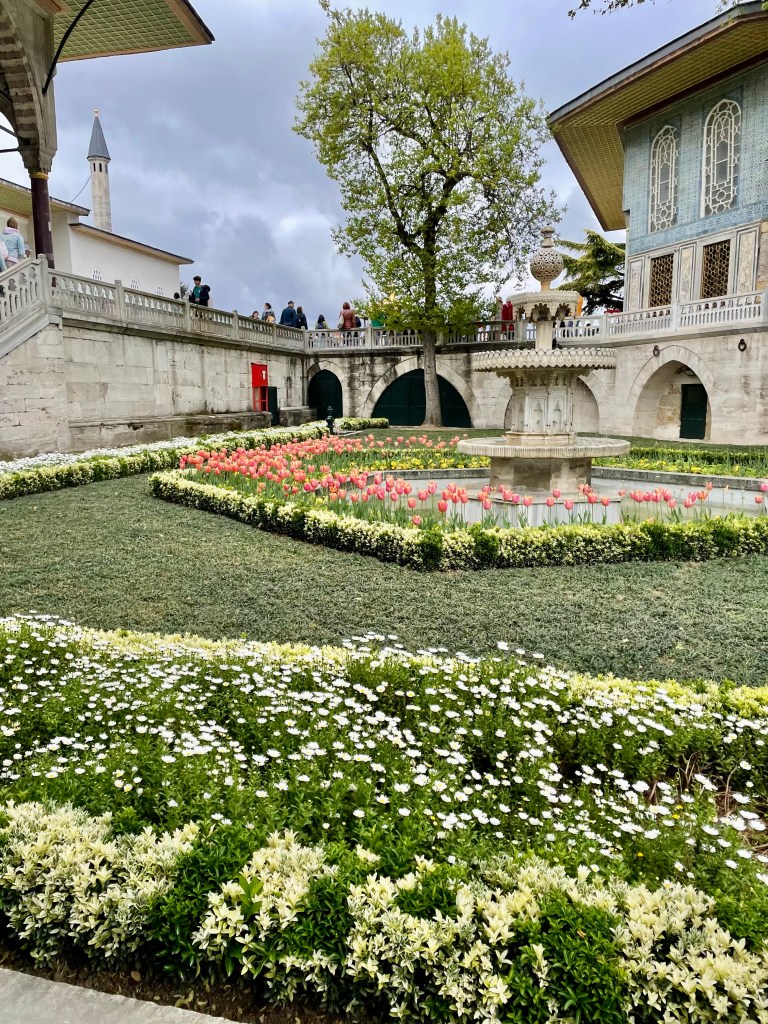
The courtyard served as a place for communal gathering outdoors, and the flow of fresh air. These courtyards often served as places for the reception of sound therapy through the live recitation of the Qur’an, the playing of maqām music, or simply the songs of birds who visited the courtyard, which was often filled with colorful and aromatic plants. As mentioned earlier, the importance of social connection amongst patients remains an important factor in recovery rates, so while the Maristan gave individuals respite from the chaos and stresses of the outside world, it didn’t socially isolate individuals who were admitted. The daily calls for prayers, public declarations of official mandates, and local announcements continued to be heard from within the courtyard. The courtyard was a potential connection for all patients of the Maristan, in relation to other occupants, and its numerous edges, walkways, and corners made it a space of differentiation for those who wanted to keep personal space in a communal environment (Awaad & Nursoy-Demir, 2024).
This integration of greenery and communal space is increasingly supported by modern research, which shows that introducing plants not only in private rooms but also in shared hospital areas can improve patient outcomes. In wards that were made more green, with the addition of plants and flowers throughout, patients had reduced pain, used fewer opioid analgesics, had normal vital signs, and stayed for shorter lengths of time. According to Ali Khan et al. (2016), patients on “greened” wards said that the plants made them feel happier, more at ease, “better,” and “more alive.”
Not only did the outdoor courtyards provide visual relief to patients, but many contained plants and herbs that were used for aromatherapy. Growing flowers was common not only for beauty and aesthetics, but also for producing medicinal derivatives and for aromatherapy. Today, most hospitals are characterized by a smell that is supposed to be sterile, but is a combination of many cleaning solutions and disinfectants such as isopropyl alcohol, chlorine, peroxide, and Pine-Sol, as well as the smell of bodily odor and fluid. Air ventilation in many hospitals is poor, with rooms being closed for hours on end, creating an even stuffier feeling. It’s not surprising then that many patients report feeling even sicker when they are admitted to the hospital. A similar effect is seen in nursing homes and long-term care facilities, where most patients seem to withdraw.
Much research has been done on the value of sensory stimulation, with upcoming therapies in Europe, particularly the Netherlands, where a therapy called Snoezelen mirrors this aspect of historical Maristans. Snoezelen, a mashup of two onomatopoeic Dutch words, snuffelen (to sniff) and doezelen (to doze), is a technique that involves generating multisensory surroundings and allowing patients to drift toward sensations that they find pleasing. With their plush furnishings, swirling holograms, moving light displays, and vibrant bubbling water tubes that mimic lava lamps, Snoezelen rooms resemble psychedelic lounges from the 1970s. Many also feature music and scents like citrus or strawberry. Despite their seemingly hallucinogenic nature, they can have a significant impact on mood and behavior without the negative effects of drugs. According to caregivers, the feelings help dementia sufferers emerge from a reclusive state. They giggle, grasp for objects, and open their eyes. Although Snoezelen therapy research is still in its early stages, studies indicate that incorporating Snoezelen therapy sessions into standard psychiatric care reduces agitation and apathy in elderly dementia patients and modifies brain-injured patients’ neurological activity in ways similar to meditation. Snoezelen has helped certain long-term care institutions in Canada reduce the requirement for antipsychotic medications to regulate problem behaviors (Lee, 2020).
Despite these promising developments, many contemporary healthcare environments seem to move in the opposite direction. In my own personal experience as an intern in a hospital, I noticed myself appalled by the bleakness of the hospital. I would find myself rushing into the shower as soon as I came home in an attempt to get rid of the hospital smell from my body. When standing behind the physician and listening to his conversation with patients, I would notice the empty, colorless walls, and the dimly lit rooms, often wondering how patients didn’t feel suffocated and even sicker in the confines of such hospitals. Through my observation of dozens of patient-physician interactions, I came to one conclusion: the design of most modern hospitals doesn’t take into account the patient’s overall healing journey, but relies heavily on a biomedicalized version of treatment that focuses on identifying symptoms and providing medication to manage those symptoms. How much of a transformation could we bring to modern spaces that are aimed at healing, if we simply took holistic patient healing into account?
In light of the historical background of the Maristans, it becomes clear that if hospitals are to serve as centers for healing, the design of such buildings should not be an afterthought. In fact, architects, doctors, and policy makers should collaborate to create spaces where patient wellness is a priority, based on factors like the hospital’s location and inclusion of healing factors, including nature, aromatherapy, and common areas that encourage socializing among patients. With the amount of contemporary research supporting the use of these elements, the question is no longer whether such change is possible, but whether we are willing to prioritize it.
References:
Ali Khan, M., Amin, N., Khan, A., Imtiaz, M., Khan, F., Ahmad, I., Ali, A., & Islam, B. (2016). Plant Therapy: a Nonpharmacological and Noninvasive Treatment Approach Medically Beneficial to the Wellbeing of Hospital Patients. Gesunde Pflanzen, 68(4), 191–200. https://doi.org/10.1007/s10343-016-0377-1
Garg, A., & Dewan, A. (2022). Designing of the Entrance Lobby of the Hospital. In Manual of Hospital Planning and Designing(pp. 113–121). https://doi.org/10.1007/978-981-16-8456-2_15
Gul, M., & Guneri, A. F. (2021). Hospital Location Selection: A Systematic Literature Review on Methodologies and Applications. Mathematical Problems in Engineering, 2021, 1–14. https://doi.org/10.1155/2021/6682958
Holt-Lunstad, J., Robles, T. F., & Sbarra, D. A. (2017). Advancing social connection as a public health priority in the United States. American Psychologist, 72(6), 517–530. https://doi.org/10.1037/amp0000103
Fetell Lee, I. (2020). JOYFUL : the surprising power of ordinary things to create extraordinary happiness. Little Brown Spark.
Miller, A. C. (2006). Jundi-Shapur, bimaristans, and the rise of academic medical centres. Journal of the Royal Society of Medicine, 99(12), 615–617. https://doi.org/10.1258/jrsm.99.12.615
Park, S.-H., & Mattson, R. H. (2008). Effects of Flowering and Foliage Plants in Hospital Rooms on Patients Recovering from Abdominal Surgery. HortTechnology, 18(4), 563–568. https://doi.org/10.21273/horttech.18.4.563
Ragab, A. (2018). The medieval Islamic hospital : medicine, religion, and charity. Cambridge University Press.
Rania Awaad, & Merve Nursoy-Demir. (2024). Maristāns and Islāmic Psychology. Taylor & Francis.
Ross, E. (2024, October 25). What is Causing Our Epidemic of Loneliness and How Can We Fix It? Harvard Graduate School of Education. https://www.gse.harvard.edu/ideas/usable-knowledge/24/10/what-causing-our-epidemic-loneliness-and-how-can-we-fix-it
Taylor, S. E., Repetti, R. L., & Seeman, T. (1997). Health psychology: what is an unhealthy environment and how does it get under the skin? Annual Review of Psychology, 48(1), 411–447. https://doi.org/10.1146/annurev.psych.48.1.411
Texas Health Resources. (2019). Special Programs. Texashealth.org. https://www.texashealth.org/Volunteer/Special-Programs
Ulrich, R. (1984). View through a Window May Influence Recovery from Surgery. Science, 224(4647), 420–421.
Wang, C.-H., Kuo, N.-W., & Anthony, K. (2019). Impact of window views on recovery—an example of post-cesarean section women. International Journal for Quality in Health Care, 31(10), 798–803. https://doi.org/10.1093/intqhc/mzz046
Cover image: author’s own photograph.